
Every year, more than one billion phone cases are sold worldwide, and a significant portion ends up in landfills. Plastic cases stick around for centuries, adding to a growing waste crisis that many consumers now want to change. Compostable phone cases offer a way for buyers to reduce waste, shrink their carbon footprint, and make simple choices that support a healthier planet without giving up style or protection.
Table of Contents
Key Takeaways
| Point | Details |
| Compostable Alternatives Reduce Waste | Compostable phone cases significantly decrease electronic waste compared to traditional plastic cases by decomposing naturally. |
| Environmental Benefits of Compostability | These cases substantially lower carbon emissions, water consumption, and landfill waste, showcasing an advanced sustainable design. |
| Consumer Education Drives Choices | Awareness about the environmental impact of accessories empowers consumers to choose sustainable products that align with their values. |
| Shorter Decomposition Timeline | Unlike conventional plastics, which can take hundreds of years to degrade, compostable cases breakdown within months, promoting a healthier ecosystem. |
Compostable Phone Cases Explained Clearly
Phone cases have long been a significant contributor to electronic waste, but compostable alternatives are changing the sustainability landscape. Recent scientific research demonstrates that biocomposite phone cases can dramatically reduce environmental impact compared to traditional plastic versions. A comprehensive study from Science Direct evaluates the biodegradability of cellphone cases under various environmental conditions, revealing promising pathways for more eco-friendly mobile accessories.
Compostable phone cases are manufactured using plant-based materials like biopolymers and organic compounds that can naturally break down in composting environments. Unlike conventional plastic cases that persist in landfills for hundreds of years, these innovative accessories are designed to decompose completely. Brands like Pela have pioneered this approach, developing cases using flax shive and sustainable biopolymers that transform phone protection into an environmentally responsible choice.
The technical process of creating compostable phone cases involves several key steps:
-
Sourcing renewable plant-based materials
-
Developing biodegradable polymer blends
-
Ensuring structural integrity comparable to traditional cases
-
Designing manufacturing processes with minimal carbon footprint
Consumers choosing compostable phone cases contribute to a broader environmental movement. These cases not only protect mobile devices but also reduce plastic waste, support sustainable manufacturing practices, and demonstrate a commitment to ecological responsibility. By selecting compostable phone cases from environmentally conscious brands, individuals can make a meaningful impact on global sustainability efforts.
How Composting Works With Phone Case Materials
Compostable phone case materials represent a revolutionary approach to managing electronic waste through advanced biodegradation technologies. Scientific research examining the degradation of biocomposite cellphone cases reveals complex mechanisms by which these innovative materials break down in different environmental conditions, offering unprecedented insights into sustainable product design.
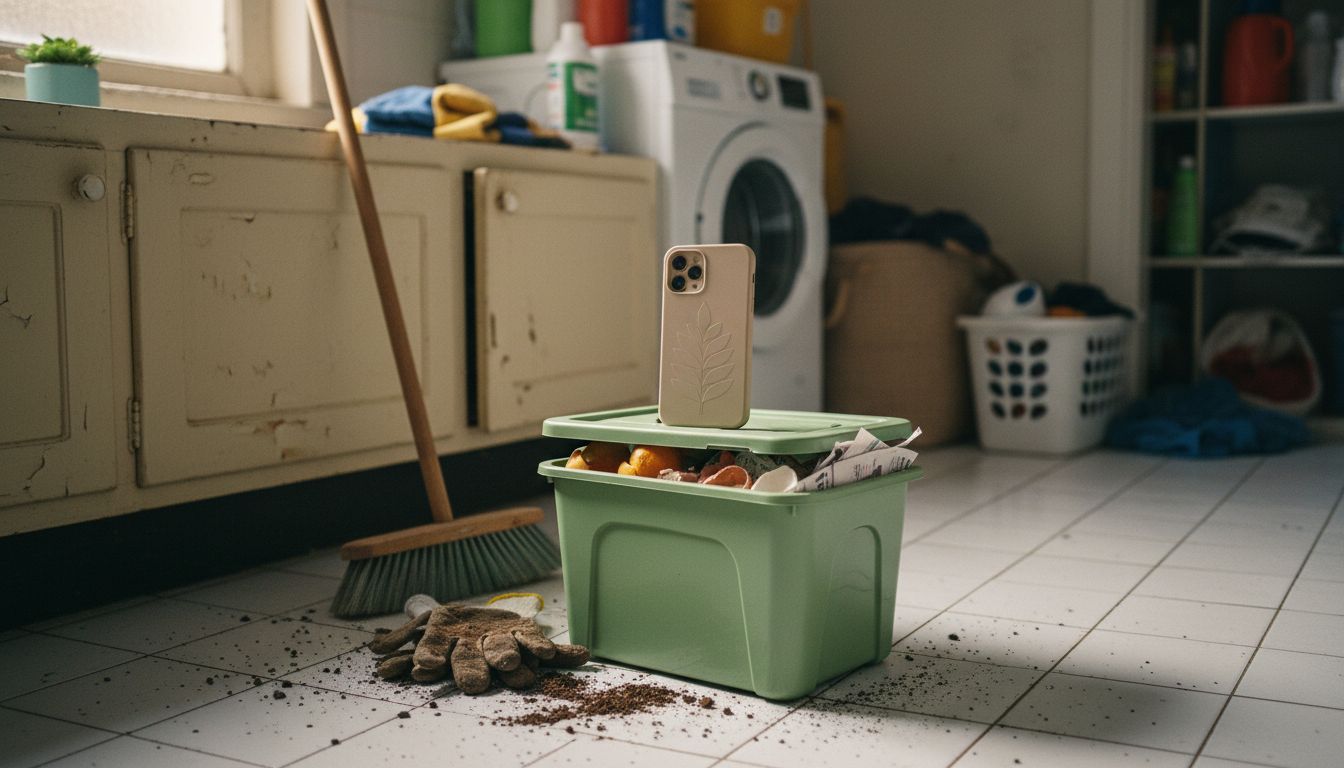
The composting process for phone case materials involves several critical stages of decomposition. Biodegradable polymers used in these cases are specifically engineered to interact with microorganisms in composting environments, enabling complete breakdown without leaving harmful residues. Unlike traditional plastic cases that persist in landfills for centuries, these advanced materials can decompose within months under appropriate composting conditions.
Key stages of phone case material composting include:
-
Initial fragmentation of molecular structures
-
Microbial colonization of material surfaces
-
Chemical breakdown of complex polymer chains
-
Transformation into organic matter and carbon dioxide
Environmentally conscious consumers can participate in this sustainable cycle by selecting compostable phone cases with proven biodegradability. Proper disposal in industrial composting facilities ensures these materials return to the ecosystem efficiently, reducing electronic waste and supporting a circular economy approach to mobile device accessories.
Environmental Benefits of Compostable Accessories
Compostable accessories are transforming waste management strategies by offering innovative solutions to electronic waste challenges. Scientific research examining waste reduction demonstrates significant environmental advantages, revealing how these sustainable products can dramatically minimize ecological impact compared to traditional manufacturing approaches.
The environmental benefits of compostable accessories are profound and multifaceted. Innovative companies have developed materials that can reduce waste production dramatically, with some manufacturers achieving remarkable sustainability metrics. Research from Pela showcases that compostable phone cases can reduce waste production by 80%, water consumption by 34%, and carbon emissions by 30%, representing a substantial leap forward in sustainable product design.
Key environmental advantages of compostable accessories include:
-
Significant reduction in landfill waste
-
Decreased methane emissions from decomposing materials
-
Lower carbon footprint during manufacturing
-
Minimal resource consumption compared to traditional plastic production
Consumers can contribute to environmental preservation by selecting compostable iPhone cases with sustainable design, supporting a circular economy that prioritizes ecological responsibility. These accessories represent more than just protective gear for mobile devices. They are a tangible commitment to reducing electronic waste and promoting sustainable manufacturing practices that benefit our global ecosystem.
Consumer Choices and Sustainability Practices
Sustainability has become a critical factor in consumer purchasing decisions, particularly among tech-savvy individuals seeking environmentally responsible accessories. Research examining consumer behavior demonstrates that product design and branding play pivotal roles in promoting biodegradable product adoption, highlighting the importance of creating appealing sustainable alternatives.
Consumer education is fundamental in driving sustainable technology accessory choices. Modern buyers increasingly understand that their individual purchasing decisions directly impact environmental outcomes. This awareness has prompted a significant shift towards eco-friendly products that offer both functional performance and ecological responsibility. Consumers are no longer satisfied with merely protecting their devices but want to ensure their accessories align with broader environmental conservation goals.
Key considerations for sustainable consumer choices include:
-
Evaluating product materials and manufacturing processes
-
Understanding complete lifecycle of electronic accessories
-
Researching brands committed to genuine sustainability
-
Prioritizing products with transparent environmental credentials
Individuals can make meaningful contributions by selecting compostable iPhone cases with sustainable design, transforming their personal technology consumption into a powerful statement of environmental stewardship. Each sustainable accessory purchase represents a vote for more responsible manufacturing practices and a commitment to reducing electronic waste in our global ecosystem.
Compostable Cases Versus Conventional Plastics
Traditional plastics and compostable phone cases represent two fundamentally different approaches to mobile device protection. Scientific research comparing degradation rates reveals significant environmental advantages of biocomposite materials, highlighting the critical differences between these two manufacturing strategies.
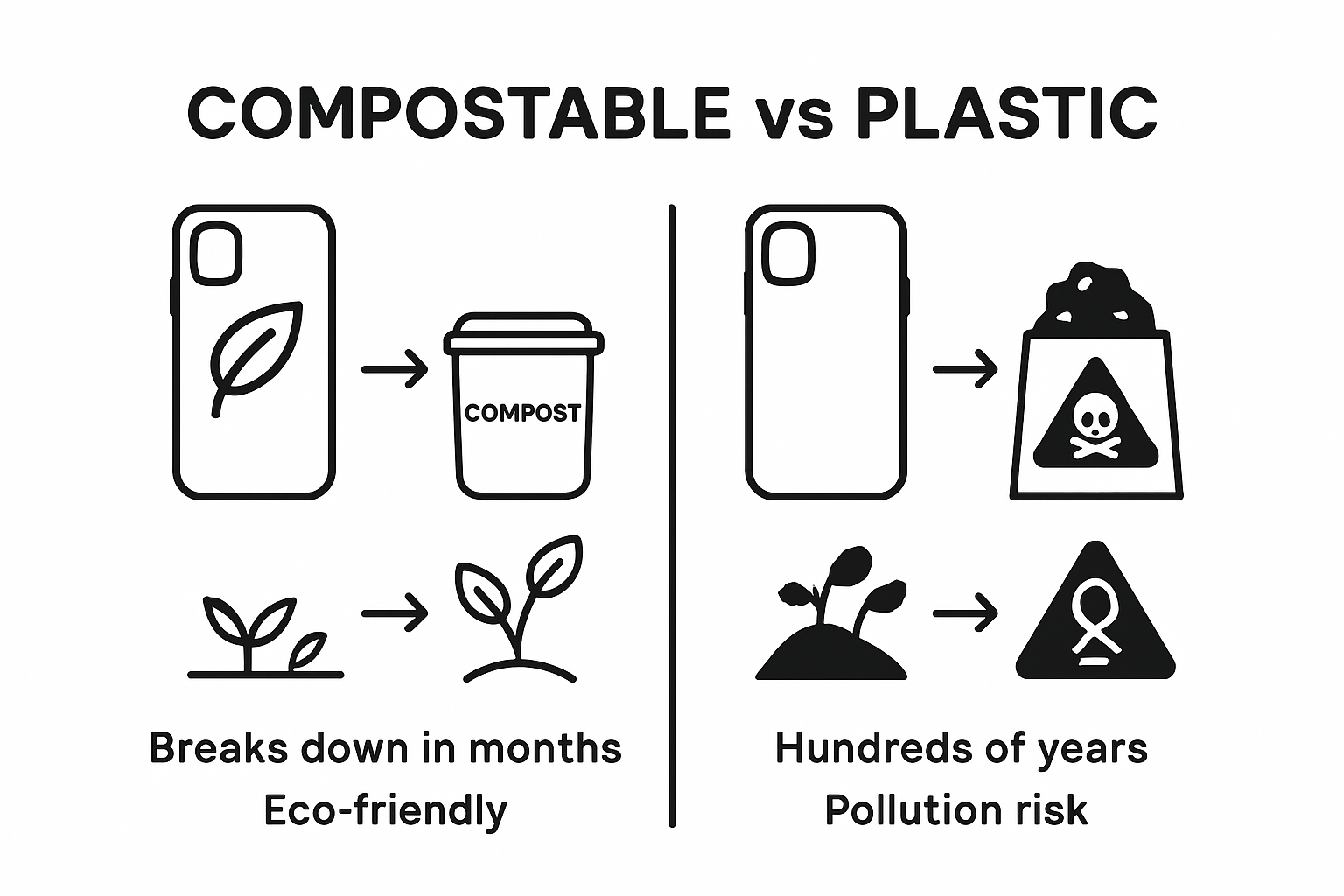
Conventional plastic phone cases typically require hundreds of years to decompose, creating long-lasting environmental challenges. In stark contrast, compostable cases are engineered to break down within months, significantly reducing their ecological footprint. The molecular structure of biocomposite materials allows for rapid biodegradation, transforming these accessories from persistent waste into beneficial organic matter through natural decomposition processes.
Key differences between compostable and conventional plastic cases include:
-
Decomposition timeline
-
Conventional plastics: 450-1000 years
-
Compostable cases: 6-24 months
-
-
Environmental impact
-
Conventional plastics: Persistent microplastic generation
-
Compostable cases: Zero waste, carbon-neutral production
-
-
Manufacturing process
-
Conventional plastics: Petroleum-based
-
Compostable cases: Plant-derived, renewable resources
-
Consumers can make a meaningful environmental statement by selecting compostable iPhone cases with sustainable design, actively choosing accessories that prioritize ecological responsibility over traditional waste-generating alternatives. Each compostable case represents a small but significant step towards reducing global electronic waste and promoting sustainable technology consumption.
Protect Your Phone and Planet with Compostable Cases Today
The challenge of reducing plastic waste and choosing eco-friendly phone accessories is clear. As the article highlights, compostable phone cases break down naturally and significantly reduce environmental impact compared to traditional plastics. If you value sustainable materials, biodegradability, and want to support responsible manufacturing that aligns with your commitment to the planet, you need the right product to make a real difference.
Discover the wide range of options at Biodegradable Phone Case | Phone Case Collection – Tallpine Cases where thoughtful design meets durable protection made from renewable resources.
Take the step to join the growing community of conscious consumers by choosing a phone case that truly matters. Visit Tallpinecases.com now for exclusive eco-friendly designs, enjoy current promotions, and make a powerful impact with every purchase. Explore your perfect case, support sustainability, and protect your device all at once.
Frequently Asked Questions
What are compostable phone cases made of?
Compostable phone cases are made from plant-based materials like biopolymers and organic compounds that can break down naturally in composting environments.
How long does it take for compostable phone cases to decompose?
Unlike traditional plastic cases, which can take hundreds of years to decompose, compostable phone cases can break down within a few months under appropriate composting conditions.
What are the environmental benefits of using compostable phone cases?
Using compostable phone cases significantly reduces landfill waste, lowers carbon emissions during manufacturing, and minimizes resource consumption, making them a more sustainable choice compared to conventional plastics.
How can consumers ensure proper disposal of compostable phone cases?
Consumers should dispose of compostable phone cases in industrial composting facilities, allowing the materials to return to the ecosystem efficiently and support sustainable waste management practices.