
Everyone who owns a smartphone contributes to a massive pile of plastic waste, with over 1.5 billion phone cases thrown away every year worldwide. The demand for eco-friendly alternatives has never been higher as environmental concerns grow. Compostable phone cases promise real change, yet confusion remains about what makes a case truly compostable. This article breaks down facts, challenges common myths, and highlights what matters most when choosing a sustainable option.
Table of Contents
- Compostable Phone Cases Defined and Debunked
- Sustainable Materials and Decomposition Process
- Environmental Impact Compared to Plastic Cases
- Design, Durability, and Style Options
- Cost, Longevity, and Value Considerations
Key Takeaways
| Point | Details |
|---|---|
| Environmental Sustainability | Compostable phone cases are made from plant-based materials and decompose within 180 days, significantly reducing landfill waste compared to traditional plastic cases. |
| Certifications Matter | Consumers should seek products with rigorous environmental certifications to ensure claims of compostability and sustainability are credible. |
| Design and Durability | Eco-friendly cases now offer aesthetic appeal and protective capabilities comparable to conventional plastic, allowing consumers to choose style without compromising values. |
| Economic Value | Despite a potentially higher upfront cost, compostable cases ultimately offer savings through reduced environmental impact and waste management expenses. |
Compostable Phone Cases Defined and Debunked
A compostable phone case represents an innovative approach to mobile device protection that prioritizes environmental sustainability. Unlike traditional plastic cases that languish in landfills for centuries, these eco-friendly alternatives are designed to break down completely under specific composting conditions. Understanding the nuances of compostable materials requires examining their core composition and environmental impact.
At its fundamental level, a compostable phone case is crafted from plant-based materials like corn starch, bamboo fibers, or recycled organic compounds that can decompose naturally without leaving toxic residues. These materials are engineered to disintegrate within industrial composting facilities, typically breaking down within 180 days under controlled temperatures and microbial activity. Key characteristics include:
- Derived from renewable resources
- Biodegradable under specific conditions
- Minimal chemical additives
- Reduced carbon footprint compared to petroleum-based plastics
The critical distinction between compostable and biodegradable phone cases lies in their environmental standards. Truly compostable products must meet rigorous certification requirements, ensuring they transform into nutrient-rich soil without releasing harmful microplastics. While many manufacturers claim eco-friendliness, discerning consumers should look for transparent documentation about material sources, decomposition timelines, and third-party environmental certifications that validate these sustainability claims.
Sustainable Materials and Decomposition Process
Sustainable phone case materials represent a groundbreaking shift in mobile accessory manufacturing, transforming how consumers think about environmental responsibility. Exploring eco-friendly phone case collections reveals a sophisticated approach to material selection that goes far beyond traditional plastic manufacturing.
The decomposition process for compostable phone cases involves multiple sophisticated stages of organic breakdown. Primary materials like corn starch, bamboo fibers, and recycled plant proteins undergo carefully engineered transformations that allow complete environmental reintegration. These materials are scientifically designed to break down under specific conditions: industrial composting facilities maintain precise temperatures between 130 and 160 degrees Fahrenheit, which activate microbial ecosystems capable of rapidly consuming organic compounds.
Specific material characteristics distinguish high-quality compostable phone cases from standard biodegradable alternatives:
- Renewable resource origin
- Minimal petroleum-based components
- Low carbon emission manufacturing
- Complete biodegradability within 180 days
- Non-toxic chemical composition
Manufacturers committed to genuine sustainability must demonstrate rigorous material testing and transparent environmental certifications. This means providing comprehensive documentation about material sourcing, production processes, and verified decomposition timelines. Consumers seeking authentic eco-friendly phone protection should prioritize brands that offer clear evidence of their environmental commitment through independent third-party sustainability assessments.
Environmental Impact Compared to Plastic Cases
The environmental consequences of phone case materials represent a critical battleground in sustainable consumer electronics. Exploring eco-friendly case options reveals stark differences between traditional plastic and compostable alternatives that extend far beyond simple material composition.

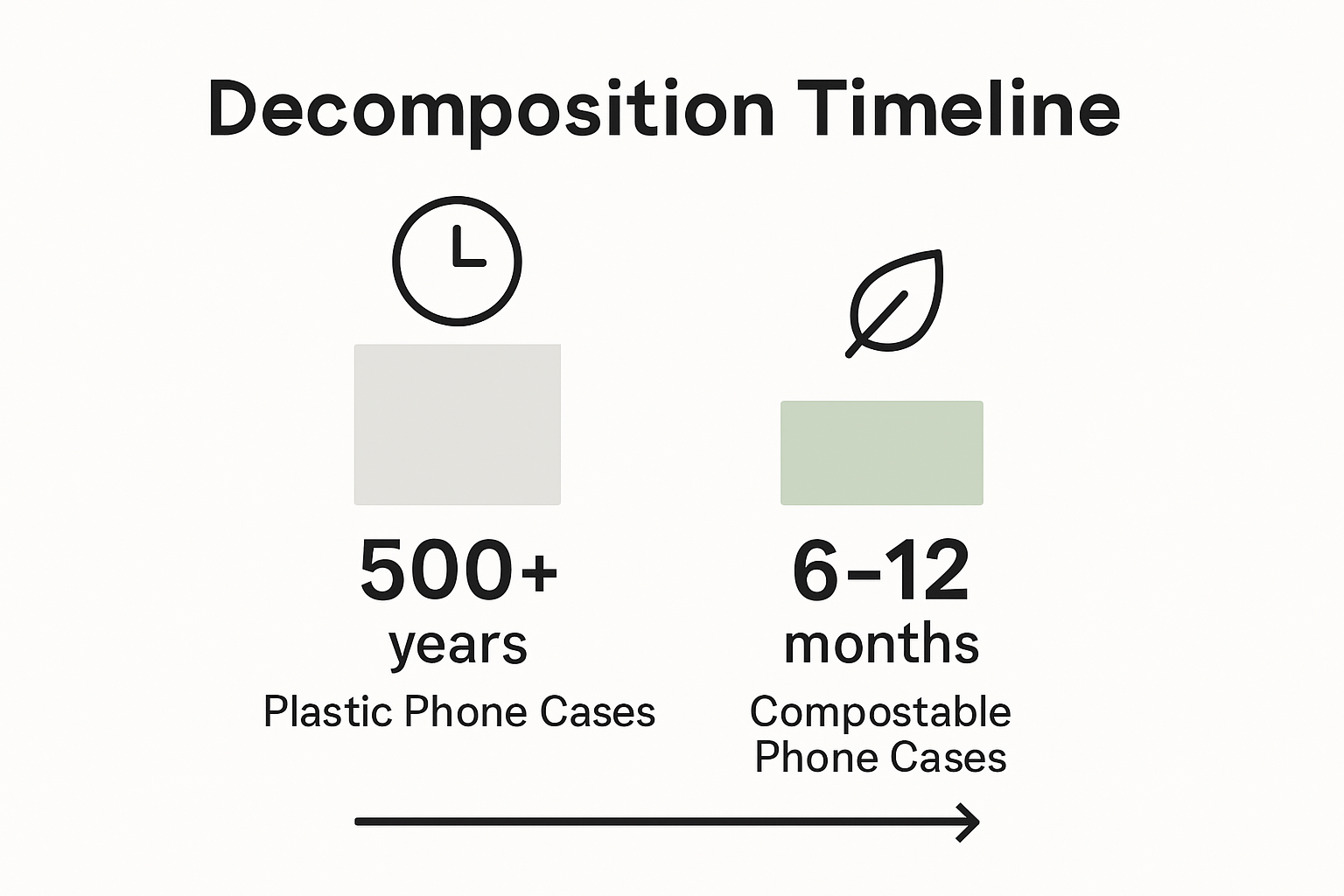
Traditional plastic phone cases contribute significantly to environmental degradation, with approximately 1.5 billion phone cases discarded annually worldwide. These petroleum-based accessories typically require 450-1000 years to decompose, creating massive waste accumulation in landfills and marine ecosystems. In contrast, compostable cases offer a revolutionary approach to reducing electronic accessory waste. Scientific research on bioplastic toxicity demonstrates the complex environmental trade-offs between conventional and alternative materials, highlighting the importance of careful material selection.
Key environmental comparisons between plastic and compostable phone cases include:
- Carbon Footprint
- Plastic Cases: High petroleum-based emissions
- Compostable Cases: Significantly reduced carbon output
- Decomposition Timeline
- Plastic Cases: 450-1000 years
- Compostable Cases: 180 days under proper conditions
- Waste Generation
- Plastic Cases: Permanent landfill accumulation
- Compostable Cases: Complete biodegradation
Consumers must recognize that not all compostable materials are created equal. Rigorous scientific evaluation remains crucial in determining the true environmental impact of alternative phone case materials. While compostable options present a promising solution, ongoing research continues to refine manufacturing processes and material compositions to maximize sustainability and minimize potential ecological disruption.
Design, Durability, and Style Options
Sustainable phone cases are revolutionizing mobile accessory design, proving that eco-friendly materials do not compromise aesthetic appeal or protective capabilities. Exploring unique compostable phone case collections reveals a diverse range of styles that challenge traditional perceptions of environmentally conscious products.
Innovative manufacturing techniques for eco-friendly cases have dramatically expanded design possibilities, incorporating natural materials like flax straw and bioplastic elastomers that offer remarkable durability. Modern compostable cases now provide protection levels comparable to traditional petroleum-based alternatives, with some manufacturers offering comprehensive device protection guarantees that demonstrate confidence in their product’s structural integrity.
Key design and durability features of compostable phone cases include:
- Customization Options
- Multiple color variations
- Unique texture designs
- Personalized printing capabilities
- Protection Levels
- Shock-absorbing material composition
- Drop-test certified performance
- Raised edge screen protection
- Aesthetic Attributes
- Natural material appearance
- Sleek and modern design profiles
- Lightweight construction
Consumers no longer need to choose between environmental responsibility and personal style. Compostable phone cases now offer a sophisticated alternative to traditional plastic accessories, allowing individuals to express their personal aesthetic while making a meaningful commitment to reducing electronic waste. The evolution of sustainable design demonstrates that eco-friendly technology can be both functional and visually appealing.
Cost, Longevity, and Value Considerations
Value-driven consumers increasingly recognize that sustainable phone cases represent more than just an environmental statement—they’re a sophisticated economic choice. Exploring eco-friendly phone case collections reveals a nuanced approach to balancing cost, durability, and long-term environmental impact.
Sustainable manufacturing techniques demonstrate remarkable resource efficiency, with compostable cases producing 30% less carbon emissions, 34% less water usage, and 80% less waste compared to traditional plastic alternatives. This efficiency translates directly into economic value for conscientious consumers who understand that true cost extends beyond the initial purchase price. While compostable cases might present a slightly higher upfront investment, their reduced environmental footprint and potential for complete biodegradation offer substantial long-term savings.
Key economic considerations for compostable phone cases include:
- Cost Factors
- Competitive pricing with premium plastic cases
- Long-term environmental savings
- Reduced waste management expenses
- Durability Metrics
- Comparable protective capabilities
- Resistance to wear and tear
- Potential warranty coverage
- Value Propositions
- Lower environmental impact
- Supporting sustainable manufacturing
- Reduced carbon footprint
Consumers must view compostable phone cases as an investment in both personal technology protection and global environmental sustainability. The marginal price difference becomes insignificant when considering the broader ecological benefits and the potential for meaningful consumer-driven change in electronic accessory manufacturing.
Discover Eco-Friendly Protection with Compostable Phone Cases
The challenge of finding a phone case that truly supports environmental sustainability while offering style and durability can be overwhelming. This article emphasized the importance of choosing a compostable phone case that breaks down naturally without harmful residues within 180 days. If you want to reduce your carbon footprint and avoid contributing to landfill waste lasting centuries, going plant-based and compostable is the clear solution.
At Tallpinecases.com, we understand this urgent need for genuine eco-conscious protection. Our diverse Biodegradable Phone Case Collection features thoughtfully designed, plant-based cases crafted from sustainable materials. Each case balances robust device protection with elegant style and environmental responsibility.
Make the switch to a compostable phone case today and join thousands of users worldwide committed to reducing electronic waste. Explore tailored options like iPhone 13 Mini Cases or iPhone 12 Mini Cases designed not only to protect your device but also the planet. Shop now at Tallpinecases.com and enjoy eco-friendly innovation combined with ongoing promotions like free shipping and exclusive discounts. Protect your phone and protect the Earth with every purchase.
Frequently Asked Questions
What are compostable phone cases made of?
Compostable phone cases are typically made from plant-based materials, such as corn starch, bamboo fibers, or recycled organic compounds. These materials are designed to decompose naturally without leaving toxic residues.
How long does it take for a compostable phone case to break down?
Under the right industrial composting conditions, a compostable phone case can break down completely within approximately 180 days, turning into nutrient-rich soil.
What is the difference between compostable and biodegradable phone cases?
Compostable phone cases meet specific environmental standards, ensuring they break down into non-toxic substances, while biodegradable cases may not have the same strict requirements and could leave harmful residues or microplastics.
Are compostable phone cases durable and protective?
Yes, many compostable phone cases are designed to be durable and protective, offering comparable levels of shock absorption and device protection as traditional plastic cases, often backed by manufacturer warranties.