
More than 400 million phone cases are sold worldwide each year, yet most end up as plastic waste. For the average smartphone user, choosing how to protect a phone means thinking beyond style and durability. Compostable phone cases offer smart protection while helping reduce the country’s mounting landfill problem. Discover how these cases break down naturally, use eco-friendly materials, and can actually make a positive impact on both device safety and the environment.
Table of Contents
Key Takeaways
| Point | Details |
| Compostable cases reduce waste | Compostable phone cases break down within 180 days in proper conditions, minimizing environmental impact compared to traditional plastic cases. |
| Material standards are crucial | Look for internationally recognized certifications to ensure the compostability and environmental integrity of choice products. |
| Robust protection | Modern compostable cases provide military-grade durability, offering effective protection while maintaining an ecological commitment. |
| Proper disposal is essential | Compostable cases need to be disposed of correctly to realize their environmental benefits; participation in composting programs is necessary. |
What compostable cases really are
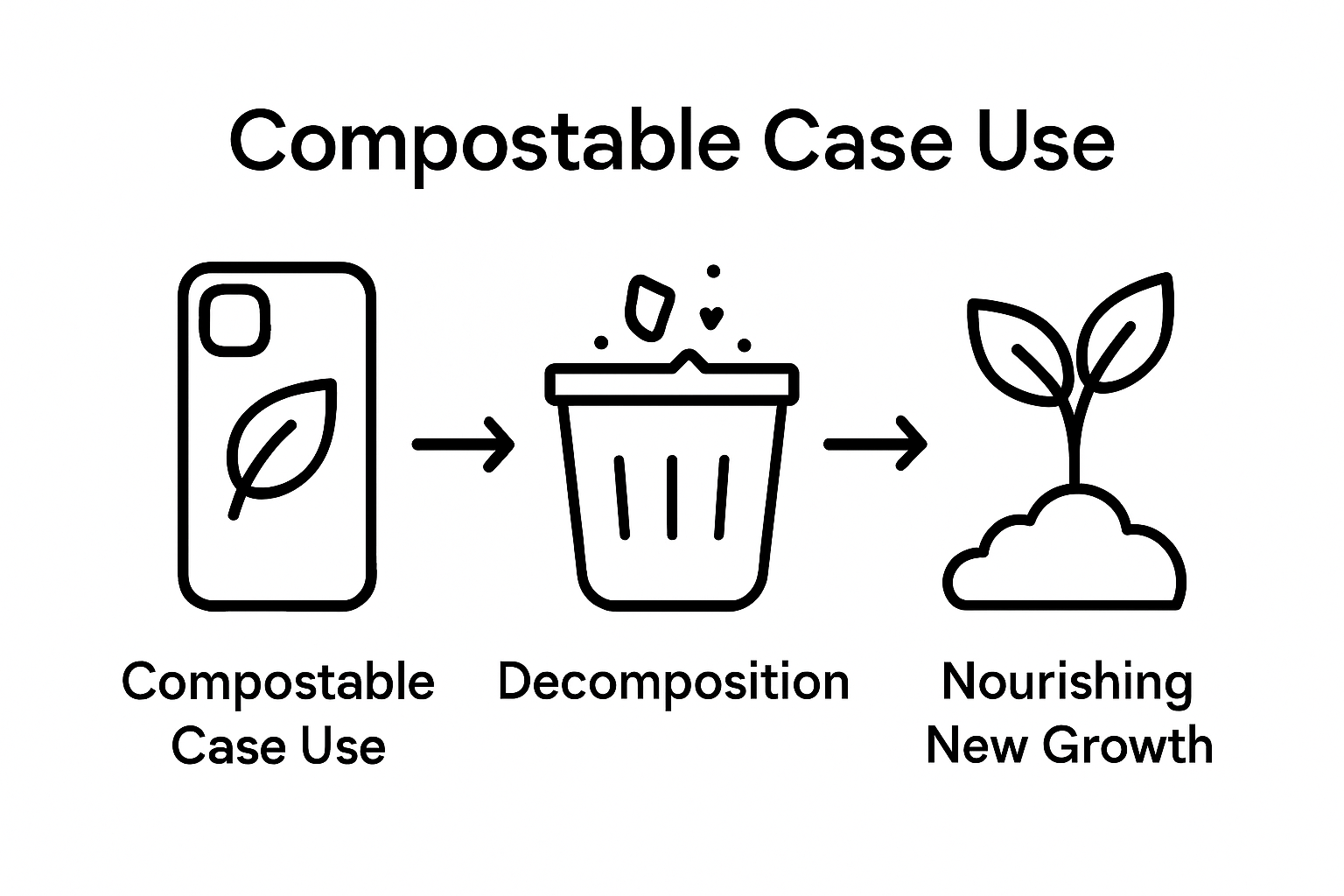
Compostable cases represent a groundbreaking approach to smartphone protection that goes far beyond traditional plastic accessories. Unlike standard phone cases that contribute to environmental waste, these innovative products are designed to break down completely in commercial composting facilities, leaving minimal environmental impact. When you choose a compostable phone case from Tallpine Cases, you are selecting an accessory engineered from plant-based materials that can naturally decompose.
Compostable materials differ significantly from biodegradable or recyclable alternatives. These cases are typically crafted from organic compounds like corn starch, bamboo fiber, or agricultural waste products that can transform into nutrient-rich soil within approximately 180 days under specific composting conditions. The key distinction is their ability to completely disintegrate without leaving toxic residue, effectively creating a closed-loop lifecycle for mobile device accessories.
The environmental benefits of compostable cases extend beyond simple waste reduction. By utilizing renewable resources and creating products that return to the earth without harmful chemicals, these innovative accessories represent a meaningful step toward sustainable technology consumption. Tech users who select compostable cases are not just protecting their devices but actively participating in a circular economy that prioritizes ecological responsibility. Each case becomes a statement about personal commitment to reducing electronic waste and supporting more sustainable manufacturing practices in the mobile accessory market.
Materials and certification standards
Compostable phone cases require rigorous material standards and third-party certifications to ensure genuine environmental credibility. Manufacturers must adhere to specific guidelines that validate the true compostability of their products, going well beyond simple marketing claims. When selecting a compostable case, tech users should look for internationally recognized certifications like the Eco-Friendly Product Collection from Tallpine Cases that demonstrate compliance with strict environmental protocols.
The most prominent certification standards for compostable materials include the European EN 13432 and the American Society for Testing and Materials (ASTM) D6400 standard. These benchmarks specify precise requirements for materials that can be considered truly compostable. Key evaluation criteria include:
-
Decomposition starts within 180 days
-
Absence of toxic residuals
-
Minimum 90% biodegradation
-
No negative impact on soil quality
-
Verifiable breakdown into natural elements
Beyond certifications, the materials themselves play a crucial role in determining a case’s environmental performance. Biopolymers derived from renewable resources like corn starch, sugarcane, and bamboo fiber represent the cutting edge of sustainable phone case manufacturing. These advanced materials not only provide robust device protection but also ensure minimal environmental footprint. Professional testing laboratories conduct comprehensive assessments, analyzing everything from material composition to decomposition rates, providing consumers with transparent and scientifically validated information about the product’s true ecological impact.
How compostable cases protect phones
Compostable phone cases are far more than just an environmentally friendly accessory they are engineered to provide robust device protection comparable to traditional plastic cases. Modern compostable cases utilize advanced materials that deliver military-grade durability while maintaining an ecological commitment. Innovative biopolymer technologies have transformed these eco-friendly accessories into serious device protection solutions.
The protective capabilities of compostable cases stem from their sophisticated material composition. Manufacturers like Tallpine Cases use specialized biopolymers combined with natural reinforcement materials such as flax fiber to create cases that can withstand significant impact. According to research, these cases can survive drops from substantial heights - typically around five to six feet onto hard surfaces. The unique material properties provide multiple layers of protection:
-
Shock absorption through flexible polymer structures
-
Scratch-resistant exterior surfaces
-
Enhanced grip to prevent accidental drops
-
Resilient material that distributes impact energy
Beyond physical protection, compostable cases offer additional benefits that traditional plastic cases cannot match. The natural materials used in their construction provide inherent flexibility and strength, allowing them to absorb and disperse impact energy more effectively than rigid synthetic alternatives. By choosing a compostable phone case with advanced protective features, tech users can simultaneously protect their devices and make an environmentally responsible choice that reduces electronic waste and supports sustainable manufacturing practices.
Environmental benefits and impact
The environmental advantages of compostable phone cases extend far beyond simple waste reduction. Innovative plant-based manufacturing processes represent a transformative approach to reducing electronic accessory waste, with production methods that can decrease carbon emissions by up to 60% compared to traditional plastic manufacturing.
Carbon footprint reduction emerges as a critical benefit of compostable phone cases. These eco-friendly accessories accomplish multiple environmental objectives simultaneously:
-
Minimal resource consumption during production
-
Dramatically reduced waste in landfills
-
Complete biodegradability within 6-24 months
-
Elimination of persistent petrochemical materials
-
Nutrient restoration to natural ecosystems
The lifecycle of a compostable phone case stands in stark contrast to conventional plastic accessories. While traditional cases can persist in environmental systems for hundreds of years, these innovative alternatives break down naturally, returning organic matter to the soil. By selecting compostable phone cases from environmentally responsible manufacturers, consumers actively participate in a more sustainable technology ecosystem. Tech users become environmental advocates through their purchasing choices, demonstrating that responsible consumption can coexist with high-performance mobile accessories.
Limitations and real‑world considerations
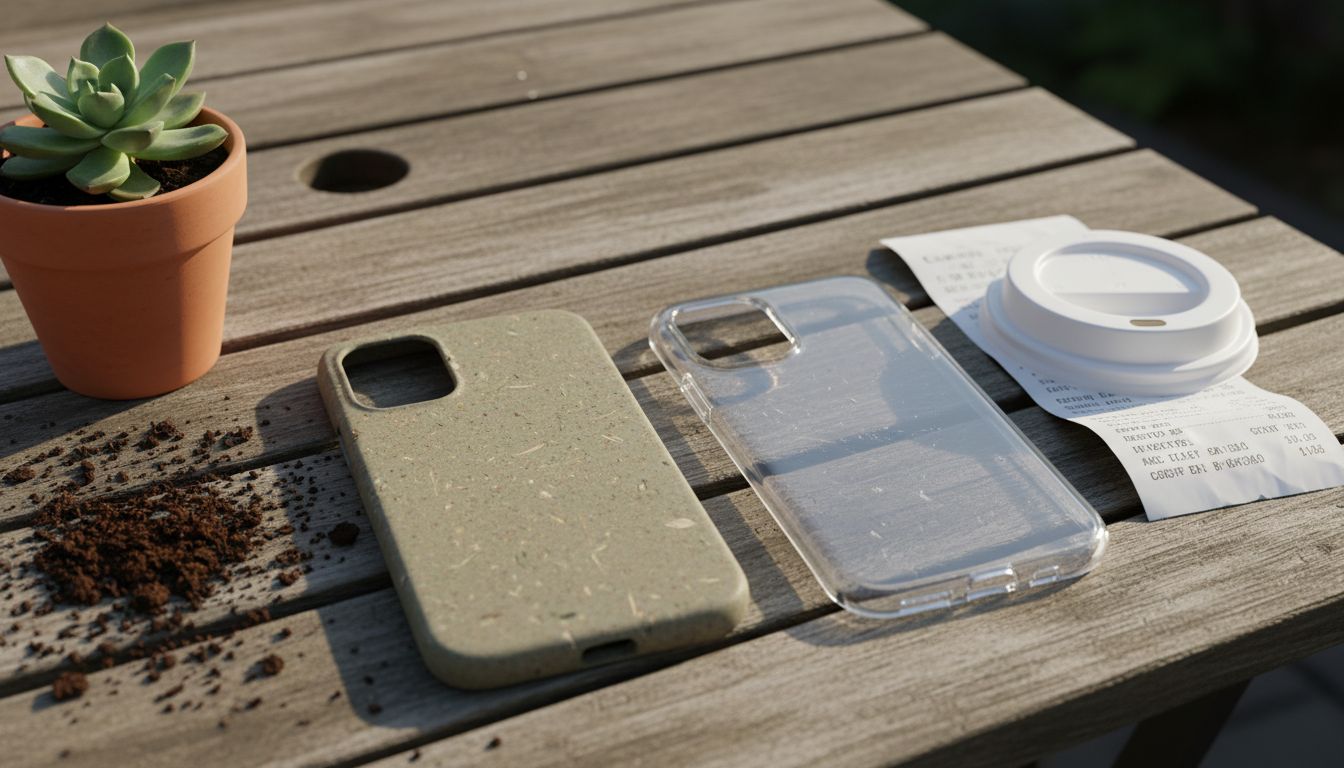
While compostable phone cases represent a significant advancement in sustainable technology accessories, they are not without practical challenges that eco-minded consumers should understand. Proper disposal remains a critical consideration for these environmentally friendly products, as simply discarding them in standard waste streams can negate their environmental benefits.
Composting constraints present the most significant real-world limitation. Not all compostable cases will break down effectively in every environment. Key challenges include:
-
Limited decomposition in traditional landfill conditions
-
Requirement for specific composting infrastructure
-
Potential need for commercial composting facilities
-
Variability in breakdown times depending on environmental conditions
-
Complexity of finding appropriate disposal methods
Consumers must take an active role in responsible case disposal. This might involve researching local composting facilities, participating in manufacturer take-back programs, or exploring upcycling options for old phone cases. Compostable cases from responsible manufacturers like Tallpine Cases often provide detailed guidance on proper end-of-life management. By understanding these nuances, tech users can make more informed decisions that maximize the environmental potential of their sustainable phone accessories while maintaining realistic expectations about their ecological impact.
Protect Your Phone and Planet with Compostable Cases from Tallpine Cases
Choosing a compostable phone case is an important step toward solving the challenge of reducing electronic waste while safeguarding your device. If you care about true environmental impact and want a phone case made from renewable materials that break down naturally without toxic residue, explore our Biodegradable Phone Case | Phone Case Collection – Tallpine Cases. These cases are designed with advanced biopolymers that offer strong protection combined with eco-friendly benefits.
Make a meaningful difference now by switching to a compostable case that supports sustainability through responsible manufacturing and carbon offset efforts. Visit Tallpinecases.com to find options tailored for your device like the eco-conscious iPhone 12 Mini Cases – Tallpine Cases or iPhone 13 Mini Cases – Tallpine Cases. Take action today and protect your phone with style that respects the earth and your values.
Frequently Asked Questions
What are compostable phone cases made of?
Compostable phone cases are typically made from plant-based materials such as corn starch, bamboo fiber, and agricultural waste products, designed to decompose naturally in composting facilities.
How do compostable cases differ from biodegradable and recyclable options?
Compostable cases are specifically engineered to break down into non-toxic elements within approximately 180 days, while biodegradable materials may leave residuals and recyclable products require processing to be reused.
What are the environmental benefits of using compostable phone cases?
Compostable phone cases contribute to waste reduction, decrease carbon emissions during production, and provide complete biodegradability, returning nutrients to the soil instead of remaining in landfills for hundreds of years.
How should I dispose of my compostable phone case?
To ensure effective decomposition, compostable phone cases should be disposed of in a commercial composting facility or through manufacturer take-back programs. Simply throwing them in regular waste can negate their environmental benefits.