
Most shoppers believe a simple ‘green’ label guarantees a product is truly eco-friendly, yet studies reveal that only about 40 percent of these claims meet authentic environmental standards. This matters for anyone seeking a stylish, durable phone case that genuinely supports sustainability without falling for empty marketing promises. Learn how proper eco-friendly certifications empower you to make smarter, informed choices for both your device and the planet.
Table of Contents
- Ecofriendly Products Explained And Common Misconceptions
- Types Of Ecofriendly Materials And Certifications
- Lifecycle Impact: Manufacturing, Use, And Disposal
- Ethical Production Practices And Transparency
- Comparing Ecofriendly And Conventional Alternatives
- How To Spot Greenwashing And Make Smart Choices
Key Takeaways
| Point | Details |
|---|---|
| Eco-Friendly Products Standards | Genuine eco-friendly products meet stringent standards, focusing on sustainable sourcing, minimal carbon footprint, and transparent manufacturing processes. |
| Importance of Certifications | Recognized certifications, such as Fairtrade and GreenGuard Gold, are crucial for verifying the sustainability and ethical practices of products. |
| Lifecycle Impact Awareness | Understanding the complete product lifecycle, from production to disposal, is essential for minimizing environmental impact. |
| Identifying Greenwashing | Consumers should be vigilant for greenwashing tactics, including vague claims and lack of third-party certifications, to make informed purchasing decisions. |
Ecofriendly Products Explained and Common Misconceptions
Understanding eco-friendly products requires more than surface-level awareness. These goods are designed to minimize environmental impact through sustainable manufacturing, materials, and lifecycle processes. Environmentally friendly products are specifically crafted to have minimal harm to ecosystems, focusing on reducing harmful emissions and preventing resource depletion.
Consumer misconceptions often emerge from vague marketing language and incomplete understanding. Many individuals mistakenly believe that simply labeling a product “green” automatically makes it sustainable. However, authentic eco-friendly products must meet rigorous standards that go beyond superficial claims. Consumer behavior toward these products is deeply influenced by environmental knowledge and perceived benefits, which means education plays a critical role in making informed purchasing decisions.
Key characteristics of genuinely eco-friendly products include:
- Sustainable sourcing of raw materials
- Minimal carbon footprint during production
- Recyclable or biodegradable packaging
- Long product lifecycle to reduce waste
- Transparent manufacturing processes
Pro tip: Always check for recognized environmental certifications like ISO 14024 when evaluating product sustainability claims.
Types of Ecofriendly Materials and Certifications
Eco-friendly materials represent a critical evolution in sustainable product design, offering consumers alternatives that minimize environmental impact. Sustainability certifications provide comprehensive frameworks for verifying responsible manufacturing and material sourcing, ensuring products meet rigorous environmental and ethical standards.
Several prominent certification programs stand out for their comprehensive approach to sustainability. Third-party certifications like the Living Building Challenge, Cradle to Cradle, and GreenGuard Gold evaluate products through multi-attribute assessments that consider environmental health, material origins, and manufacturing ethics. These certifications go beyond surface-level claims, providing consumers with reliable indicators of genuine sustainability.
Common types of eco-friendly materials include:
- Recycled plastics and metals
- Rapidly renewable resources like bamboo
- Biodegradable plant-based materials
- Organic textiles with low water consumption
- Reclaimed or sustainably harvested wood products
The most reputable sustainability certifications encompass multiple dimensions:
Here’s a quick overview of key sustainability certifications and what they focus on:
| Certification Name | Main Focus Area | Issuing Body |
|---|---|---|
| Forest Stewardship Council (FSC) | Responsible forestry and wood products | FSC International |
| B Corporation Certification | Social and environmental accountability | B Lab |
| Fairtrade International | Ethical sourcing and fair wages | Fairtrade International |
| GreenGuard Gold | Low chemical emissions for indoor air | UL Environment |
| Cradle to Cradle Certified | Product lifecycle and material health | Cradle to Cradle Products Innovation Institute |
- Forest Stewardship Council (FSC)
- B Corporation Certification
- Fairtrade International
- GreenGuard Gold
- Cradle to Cradle Certified
Pro tip: When shopping for eco-friendly products, always verify multiple certification labels to ensure comprehensive environmental and ethical standards.
Lifecycle Impact: Manufacturing, Use, and Disposal
Product lifecycles represent a comprehensive approach to understanding environmental sustainability beyond simple material composition. Life-cycle assessment (LCA) provides a standardized method for evaluating environmental impacts across every stage of a product’s existence, from raw material extraction through manufacturing, consumer use, and final disposal.

Each stage of a product’s lifecycle contributes uniquely to its overall environmental footprint. The manufacturing phase typically generates the most significant environmental challenges, including energy consumption, carbon emissions, water usage, and potential toxic waste production. During the use phase, consumers play a critical role in minimizing environmental impact through responsible consumption, efficient utilization, and proper maintenance of products.
Key environmental considerations across product lifecycle stages include:
- Raw material sourcing and extraction
- Manufacturing energy efficiency
- Transportation and distribution emissions
- Product durability and potential for repair
- End-of-life disposal or recycling options
The disposal stage represents a crucial environmental checkpoint where responsible consumer choices can dramatically reduce ecological harm. Consumers can minimize waste by:
- Choosing products with recyclable components
- Selecting items designed for easy disassembly
- Supporting brands with take-back or recycling programs
- Properly sorting and disposing of products
Pro tip: Research a product’s full lifecycle before purchasing to understand its comprehensive environmental impact beyond initial marketing claims.
Ethical Production Practices and Transparency
Ethical production represents a critical framework for responsible manufacturing that goes far beyond traditional business practices. Organizational ethical culture plays a fundamental role in promoting transparency and accountability in production systems, ensuring that companies maintain high standards of social and environmental responsibility.
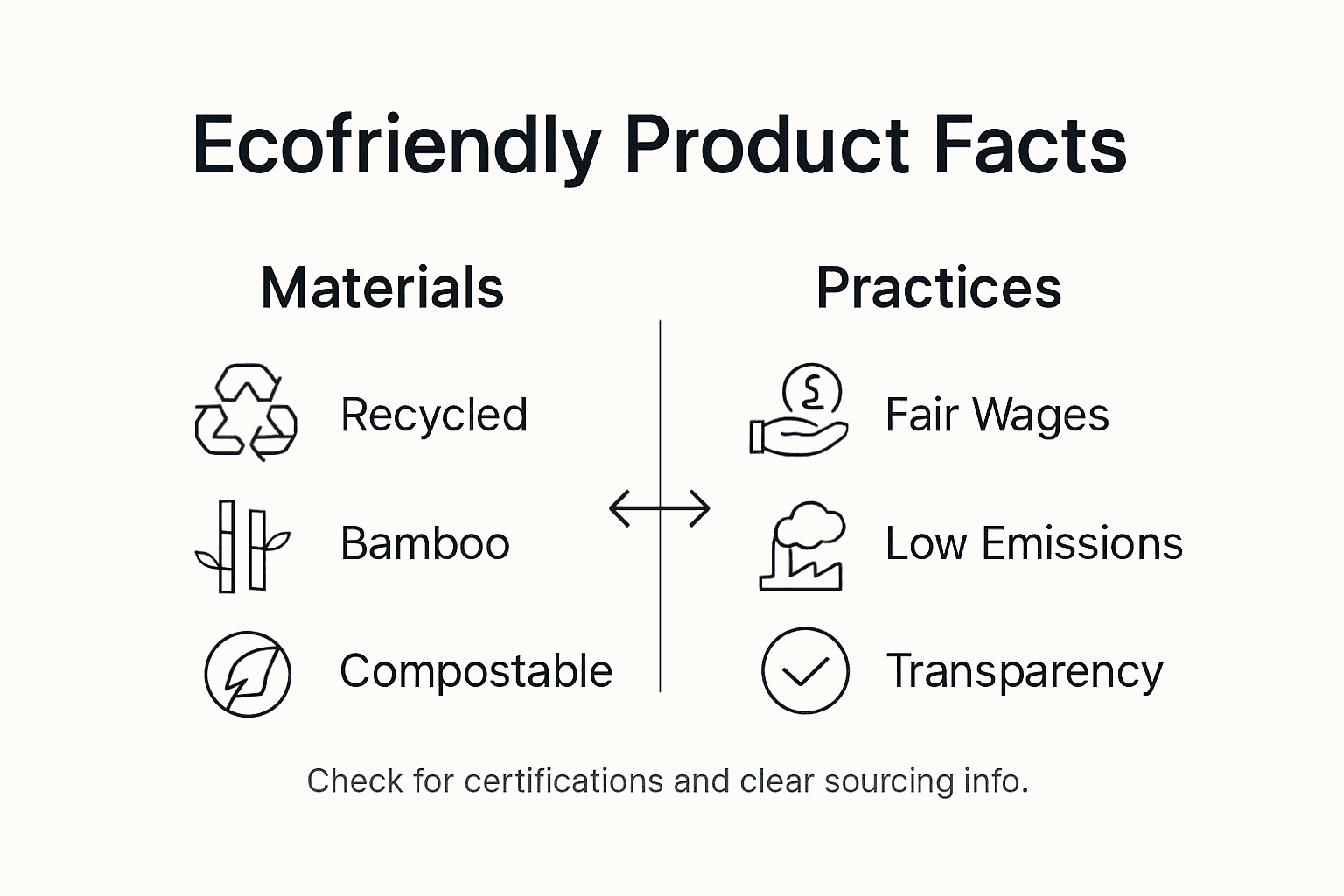
Transparency in production involves comprehensive disclosure of manufacturing processes, supply chain relationships, labor practices, and environmental impacts. Modern consumers increasingly demand visibility into how products are made, pushing companies to adopt more open and honest communication strategies. This shift requires businesses to provide detailed information about material sourcing, worker conditions, carbon emissions, and overall environmental footprint.
Key elements of ethical production practices include:
- Fair wages and safe working conditions
- Respect for human rights throughout the supply chain
- Minimizing environmental degradation
- Supporting local communities
- Ensuring workplace diversity and inclusion
- Maintaining transparent reporting mechanisms
Consumers can evaluate a company’s ethical production commitment by:
- Reviewing published sustainability reports
- Checking third-party certifications
- Investigating labor and environmental compliance records
- Examining supply chain transparency initiatives
- Supporting brands with demonstrated ethical track records
Pro tip: Look beyond marketing claims and request specific documentation about a company’s ethical production practices to make truly informed purchasing decisions.
Comparing Ecofriendly and Conventional Alternatives
Sustainability comparison reveals significant differences between ecofriendly and conventional product alternatives across multiple dimensions. Evaluating ecofriendly materials involves comprehensive analysis of environmental footprint, social responsibility, and economic feasibility, providing consumers with a nuanced understanding of true environmental impact.
Research comparing organic and conventional approaches demonstrates that ecofriendly practices often yield substantial environmental benefits, particularly in areas like biodiversity, ecosystem resilience, and long-term resource management. While conventional methods might offer short-term efficiency, ecofriendly alternatives prioritize holistic environmental health and sustainable development.
Key comparative dimensions include:
- Carbon emissions
- Resource consumption
- Biodiversity impact
- Long-term environmental resilience
- Production efficiency
- Waste generation
- Chemical usage
Detailed comparison factors between ecofriendly and conventional alternatives:
The following table summarizes major differences between ecofriendly and conventional products:
| Aspect | Ecofriendly Products | Conventional Products |
|---|---|---|
| Resource Use | Renewable, recycled sources | Virgin, non-renewable materials |
| Lifecycle Impact | Reduced overall footprint | Higher emissions and waste |
| Health Concerns | Fewer toxic chemicals | Potential exposure to pollutants |
| Long-Term Cost | Often lower due to longevity | May increase due to replacements |
- Environmental preservation
- Production sustainability
- Energy efficiency
- Waste reduction potential
- Impact on local ecosystems
- Economic long-term viability
- Consumer health considerations
Pro tip: Always request detailed environmental impact assessments when comparing ecofriendly and conventional product alternatives to make truly informed purchasing decisions.
How to Spot Greenwashing and Make Smart Choices
Greenwashing represents a deceptive marketing strategy where companies exaggerate or misrepresent their environmental credentials. Consumers can effectively identify greenwashing by carefully researching companies’ environmental claims and looking for verified certifications, which requires a critical and informed approach to purchasing decisions.
The most common greenwashing tactics include using vague environmental terminology, displaying misleading imagery, and making unsubstantiated sustainability claims. Companies often employ these strategies to appear more environmentally responsible without making meaningful changes to their production processes or environmental impact. Sophisticated consumers must look beyond surface-level marketing and demand concrete evidence of sustainable practices.
Red flags that indicate potential greenwashing include:
- Lack of specific, measurable environmental goals
- Absence of third-party certifications
- Overly generic terms like ‘natural’ or ‘green’
- Minimal transparency about manufacturing processes
- Inconsistent environmental messaging
- No quantifiable sustainability metrics
Strategies for making smart, sustainable purchasing choices:
- Request detailed environmental impact reports
- Verify independent sustainability certifications
- Investigate company’s entire supply chain
- Compare products across different brands
- Prioritize companies with transparent reporting
Pro tip: Always cross-reference a company’s environmental claims with independent research and verified certification standards to make truly informed purchasing decisions.
Choose Truly Ecofriendly Phone Cases That Match Your Values
Understanding what makes a product ecofriendly helps you avoid greenwashing and supports genuine sustainability efforts. If you care about sustainable sourcing, biodegradable materials, and transparent production, you want a phone case that reflects these key principles. At Tallpinecases.com, we specialize in plant-based, ecofriendly protective phone cases that align with your commitment to reducing environmental impact.
Explore our unique selection of iPhone 15 Pro Max Cases and iPhone 15 Pro Cases crafted from compostable and sustainable materials. Act now to take advantage of our frequent promotions like Black Friday discounts and free shipping offers. Shop confidently knowing your choice supports tree planting and carbon offset programs. Visit Tallpinecases.com today to protect your device with style and conscience.
Frequently Asked Questions
What are the key characteristics of eco-friendly products?
Genuinely eco-friendly products typically include sustainable sourcing of raw materials, minimal carbon footprint during production, recyclable or biodegradable packaging, a long product lifecycle, and transparent manufacturing processes.
How can I identify if a product is genuinely eco-friendly?
Look for recognized environmental certifications, such as ISO 14024, which indicate that the product meets rigorous sustainability standards. Also, evaluate the product’s lifecycle impact and check for transparent manufacturing practices.
What are common types of eco-friendly materials?
Common eco-friendly materials include recycled plastics and metals, rapidly renewable resources like bamboo, biodegradable plant-based materials, organic textiles, and reclaimed or sustainably harvested wood products.
What strategies can I use to avoid greenwashing?
To avoid greenwashing, research companies’ environmental claims, look for verified certifications, check for specific and measurable sustainability goals, demand transparency about manufacturing processes, and be cautious of vague terms like ‘natural’ or ‘green.’