
Most American consumers want eco-friendly options, yet only about 9 percent of plastics in the United States are actually recycled. That reality drives growing interest in compostable phone cases, with many believing they can make a real difference. Before you trust the label, though, it helps to know exactly how compostable cases work and why so many myths surround them. This guide breaks down composting science, real world performance, and what truly matters in choosing a sustainable case.
Table of Contents
- Defining Compostable Cases And Common Myths
- Materials Used In Compostable Phone Cases
- How Compostable Cases Biodegrade In Practice
- Certification Standards And Regulatory Requirements
- Environmental Impact Compared To Other Alternatives
Key Takeaways
| Point | Details |
|---|---|
| Compostable Cases | Designed to decompose in industrial composting environments, minimizing environmental impact compared to traditional plastics. |
| Material Composition | Made from eco-friendly, plant-based materials like corn starch and bamboo, offering unique properties for protection and sustainability. |
| Regulatory Compliance | Must meet strict standards such as ASTM D6400 or EN 13432, ensuring complete decomposition without toxic residues. |
| Environmental Benefits | Enable significant reductions in waste and carbon emissions, promoting a shift towards circular economy models in consumer electronics. |
Defining Compostable Cases and Common Myths
Understanding what truly makes a phone case compostable requires moving beyond marketing claims and examining scientific realities. While many manufacturers tout eco friendly credentials, the actual composting process involves complex environmental interactions. Experts caution that lab results may not reflect real-world degradation conditions, making it crucial to critically evaluate compostability claims.
Compostable Cases are phone protective accessories designed to break down completely in specific composting environments, leaving minimal environmental impact. Unlike traditional plastic cases that persist in landfills for decades, these innovative products aim to return to natural biological cycles. Key characteristics include:
- Made from plant-based materials like corn starch, bamboo, or agricultural waste
- Capable of decomposing within 180 days in industrial composting facilities
- Containing zero toxic residues after complete breakdown
- Engineered to minimize microplastic generation
Common myths frequently misrepresent these products. Many consumers mistakenly believe all biodegradable cases will decompose anywhere, which is fundamentally incorrect. Industrial composting requires specific temperature, humidity, and microbial conditions that typical backyard compost piles or natural environments cannot replicate. Temperature-controlled facilities maintain around 140 degrees Fahrenheit, accelerating organic material breakdown in ways typical environments cannot.
Technical specifications matter significantly. A truly compostable case must meet strict standards like ASTM D6400 or EN 13432, which mandate complete decomposition without leaving harmful residues. Consumers should look for third-party certifications and understand that “biodegradable” does not automatically mean “compostable” - a critical distinction in sustainable product selection.
Materials Used in Compostable Phone Cases
The evolution of compostable phone case materials represents a significant breakthrough in sustainable technology. Modern manufacturers are pioneering innovative solutions that replace traditional petroleum-based plastics with environmentally conscious alternatives. Polybutylene adipate terephthalate (PBAT) emerges as a remarkable biodegradable copolymer, offering flexibility and resilience similar to conventional low-density polyethylene while maintaining ecological integrity.
Organic Materials form the foundation of most compostable phone cases. These cutting edge components include:
- Plant-based starches from corn and wheat
- Agricultural waste derivatives
- Bamboo fiber composites
- Reclaimed organic polymers
- Hemp-based structural materials
Each material brings unique properties to phone case design. Corn starch derivatives provide excellent moldability, while bamboo fibers contribute exceptional strength and natural antibacterial qualities. Hemp-based materials offer remarkable durability and minimal environmental footprint, creating protective accessories that literally grow from renewable resources.
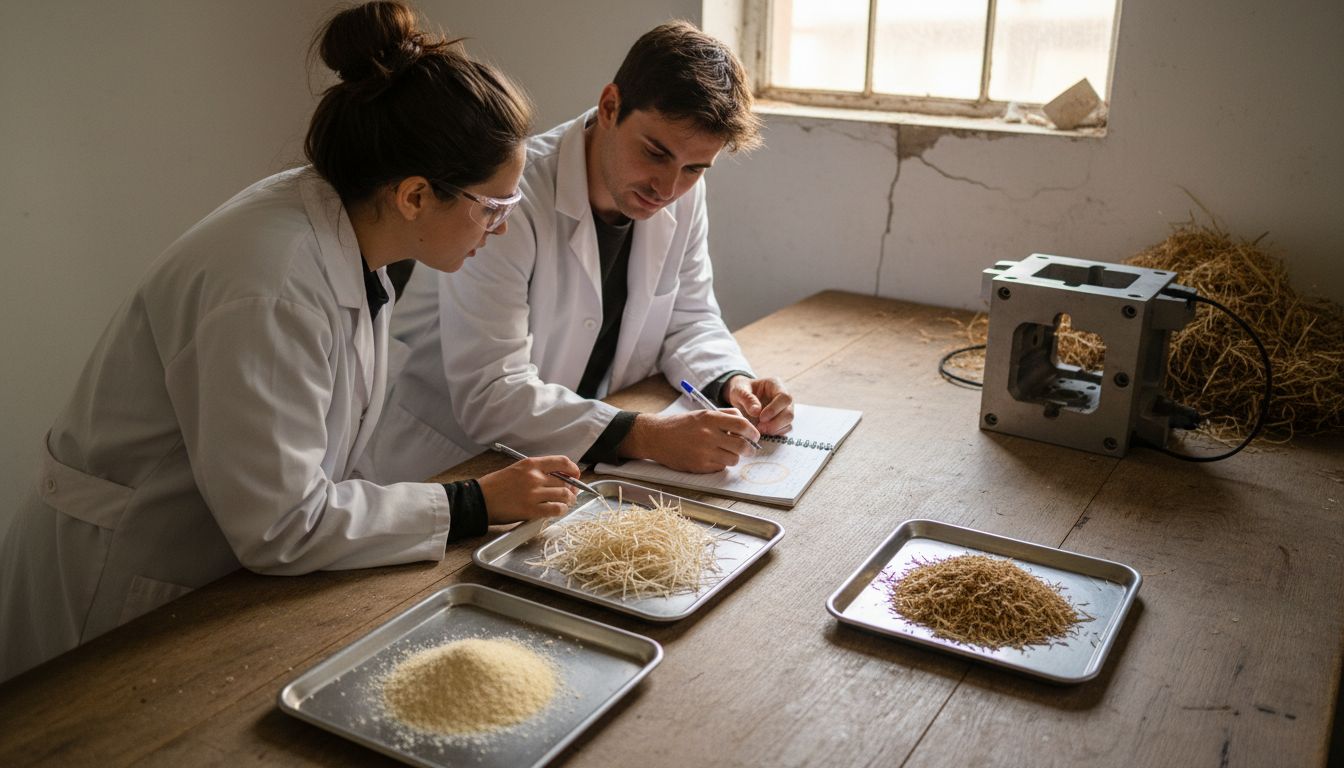
Advanced manufacturing processes transform these organic ingredients into high performance protective cases. Sophisticated techniques like compression molding and thermal bonding enable manufacturers to create cases that meet rigorous technical standards. The goal extends beyond simple biodegradability - these cases must also provide robust device protection, shock absorption, and aesthetic appeal while ensuring complete environmental decomposition within industrial composting environments.
How Compostable Cases Biodegrade in Practice
The biodegradation of phone cases is a nuanced process that depends on multiple environmental and technical factors. Certain biodegradable plastics can self-biodegrade in home compost conditions within six months, though the actual decomposition rate varies significantly based on specific material compositions and surrounding conditions.
Biodegradation Mechanisms involve complex interactions between organic materials and microorganisms. Key stages of decomposition include:
- Initial material fragmentation
- Bacterial and fungal colonization
- Chemical breakdown of polymer structures
- Complete conversion to organic biomass
- Minimal residual microplastic generation
Industrial composting facilities provide the most controlled environment for rapid case decomposition. These specialized facilities maintain precise temperature ranges, humidity levels, and microbial populations that accelerate organic material transformation. Temperatures typically range between 130-160 degrees Fahrenheit, creating optimal conditions for breaking down complex molecular structures in compostable phone cases.
Research demonstrates that material preprocessing and bacterial diversity significantly impact decomposition rates. Industrial-scale validation remains crucial for understanding the complete lifecycle of these innovative protective accessories. The ultimate goal extends beyond simple disposal - creating phone cases that seamlessly return to natural biological cycles while maintaining the protective qualities consumers demand.
Certification Standards and Regulatory Requirements
Navigating the complex landscape of compostable phone case regulations requires understanding multiple global certification standards. Compostable phone cases must meet rigorous testing standards like ASTM D6400 and EN 13432, ensuring they decompose completely and harmlessly, providing consumers with confidence in their environmental claims.
Certification Criteria for compostable phone cases involve comprehensive evaluation across multiple dimensions:
- Complete material decomposition within specified timeframes
- Zero toxic residue generation
- Compliance with international environmental standards
- Verification by independent third-party organizations
- Minimal microplastic contamination
Third-party certifications play a crucial role in validating environmental claims. Organizations like TUV Austria and BPI (Biodegradable Products Institute) conduct extensive testing to confirm that compostable cases meet stringent decomposition requirements. These certifications go beyond simple marketing claims, providing scientific validation of a product’s true environmental impact.
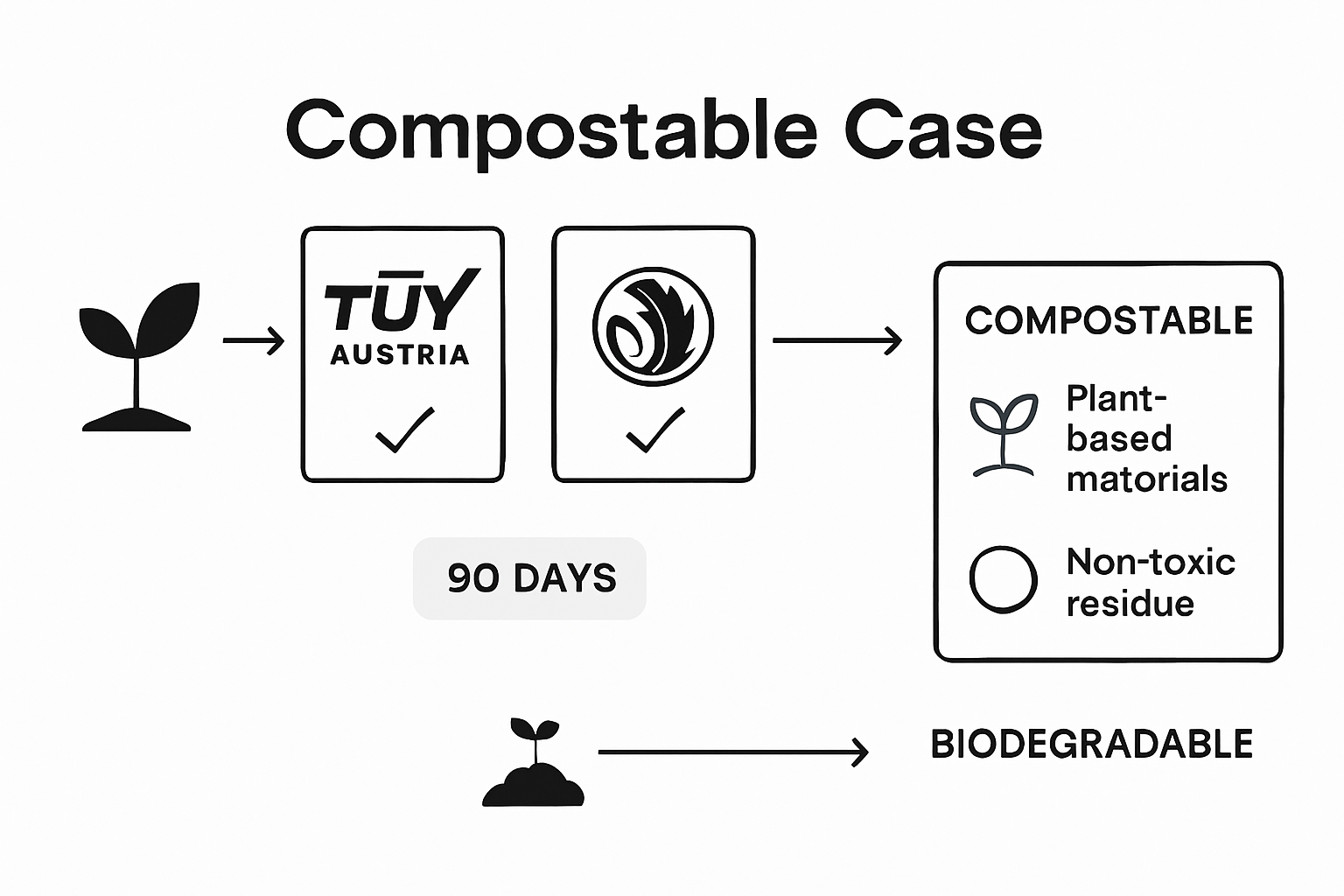
Regulatory compliance extends beyond technical standards. Different regions implement unique environmental regulations that impact compostable product manufacturing. Manufacturers must navigate complex legal landscapes, ensuring their products meet not just technical specifications but also regional environmental protection guidelines. This multifaceted approach guarantees that compostable phone cases represent genuine sustainable innovation rather than mere greenwashing tactics.
Environmental Impact Compared to Other Alternatives
Comparing the ecological footprint of phone case materials reveals stark differences in environmental sustainability. Compostable phone cases demonstrate significant reductions in environmental impact, including 80% waste reduction, 34% lower water use, and 30% decreased carbon emissions compared to traditional petroleum-based plastic alternatives.
Material Comparison across different phone case types highlights critical environmental distinctions:
- Petroleum-based plastic cases
- Non-biodegradable
- Persist in landfills for hundreds of years
- High carbon emission during production
- Silicone cases
- Partially recyclable
- Slow decomposition rates
- Moderate environmental impact
- Compostable plant-based cases
- Fully biodegradable
- Zero waste end-of-life cycle
- Renewable resource sourcing
Beyond raw material considerations, the lifecycle analysis of compostable phone cases demonstrates profound ecological advantages. These innovative accessories transform the traditional linear consumption model into a circular economy approach, where product materials return naturally to biological systems. By utilizing renewable plant-based resources and ensuring complete decomposition, compostable cases represent a revolutionary shift in consumer electronics accessories.
The environmental benefits extend far beyond simple waste reduction. Compostable phone cases challenge traditional manufacturing paradigms, proving that protective technology can coexist harmoniously with ecological sustainability. Each case represents a small but significant step toward reducing global plastic pollution and promoting more responsible consumer choices.
Discover Truly Compostable Phone Cases That Match Your Values
The article highlights the challenge of identifying authentic compostable phone cases that meet strict standards and break down responsibly in industrial composting environments. If you want to avoid greenwashing and choose cases made from genuine plant-based materials that fully biodegrade without leaving harmful residues, your search ends here. At Tallpine Cases, we understand the importance of certified compostability, superior protection, and stylish designs all in one sustainable product.
Take control of your environmental impact today with our carefully crafted Biodegradable Phone Case | Phone Case Collection – Tallpine Cases featuring cases engineered to meet high compostability standards.
Choose eco-friendly phone protection that aligns perfectly with the principles explained in the article. Explore our range of plant-based, compostable cases with unique prints and enjoy promotions like free shipping and Black Friday deals only at TallpineCases.com. Make your next phone case a responsible choice that supports sustainability and your style. Start shopping now to combine innovation, certification, and care for the planet.
Frequently Asked Questions
What materials are used to make compostable phone cases?
Compostable phone cases are typically made from plant-based materials such as corn starch, bamboo fibers, agricultural waste, and hemp-based composites, offering a sustainable alternative to traditional plastics.
How long does it take for a compostable phone case to biodegrade?
In industrial composting facilities, compostable phone cases can decompose within 180 days under optimal conditions, which include specific temperature and humidity levels.
What are the key characteristics of truly compostable cases?
Truly compostable cases are made from organic materials, decompose without toxic residues, minimize microplastic generation, and meet strict standards like ASTM D6400 or EN 13432.
What distinguishes compostable phone cases from biodegradable ones?
While all compostable products are biodegradable, not all biodegradable products are compostable. Compostable cases specifically require industrial conditions for decomposition without leaving harmful residues, unlike many biodegradable items that may not break down completely in typical environments.
Recommended
- Compostable iPhone Case - Forest Green – Tallpine Cases
- Compostable iPhone Case - Red – Tallpine Cases
- Compostable iPhone Case - Neptune Blue – Tallpine Cases
- Compostable iPhone Case - Teal – Tallpine Cases
- Comment faire compost maison : Guide pratique étape par étape – The Zoofamily
- Understanding What is a Sustainable Diet for Healthy Living - LeanAndFit