
Most consumers are surprised to learn that over 1.5 billion phone cases are discarded worldwide each year, with plastic cases making up a hefty share of that waste. Every new phone purchase adds to this growing pile, highlighting the real impact of everyday choices. Plantbased phone cases offer an environmentally responsible alternative, combining tough protection with renewable materials. This article explores how these innovations break common misconceptions and deliver both durability and peace of mind for eco-conscious users.
Table of Contents
- Defining Plantbased Phone Cases And Misconceptions
- Common Materials Used In Plantbased Cases
- Key Features And How They’re Manufactured
- Sustainability Benefits And Eco Impact
- Comparing Plantbased And Traditional Phone Cases
Key Takeaways
| Point | Details |
|---|---|
| Environmental Sustainability | Plantbased phone cases use renewable organic materials, significantly reducing plastic waste and carbon emissions during production. |
| Durability and Performance | These cases offer robust protection comparable to traditional plastic cases, debunking the myth that eco-friendly options lack durability. |
| Biodegradability | Plantbased cases are fully biodegradable, ensuring they do not contribute to long-term environmental contamination after their lifecycle. |
| Consumer Responsibility | Choosing plantbased cases allows consumers to participate in a broader movement towards sustainable technology, combining device protection with environmental stewardship. |
Defining Plantbased Phone Cases and Misconceptions
Plantbased phone cases represent an innovative approach to mobile device protection that prioritizes environmental sustainability while delivering robust protection. Unlike traditional plastic or synthetic cases, plantbased phone cases are manufactured using renewable organic materials sourced from plant derivatives like cornstarch, bamboo, hemp, and other biodegradable components. These eco-conscious accessories are engineered to provide comprehensive smartphone protection without compromising environmental responsibility.
The primary misconception surrounding plantbased phone cases is that they sacrifice durability for ecological benefits. In reality, modern eco-friendly phone case technologies have advanced significantly, offering impact resistance and protective capabilities comparable to traditional petroleum-based plastic cases. Manufacturers like Tallpine Cases utilize advanced biomaterials that maintain structural integrity while dramatically reducing carbon footprints. These cases undergo rigorous testing to ensure they can withstand everyday drops, impacts, and environmental challenges while remaining compostable at the end of their lifecycle.
Key characteristics that distinguish plantbased phone cases include:
- Composed of renewable organic materials
- Fully biodegradable after product lifecycle
- Comparable protective capabilities to standard cases
- Reduced environmental impact during manufacturing
- Lower carbon emissions compared to conventional phone case production
Understanding plantbased phone cases requires recognizing them as more than just an environmental statement. They represent a sophisticated engineering solution that balances consumer electronics protection with responsible material selection. By choosing plantbased cases, consumers actively participate in reducing plastic waste while maintaining high-performance mobile device protection.
Common Materials Used in Plantbased Cases
The world of plantbased phone cases is characterized by innovative materials that transform sustainable technology into practical smartphone protection. Advanced bioplastic technologies have revolutionized the way manufacturers approach mobile accessory production, introducing renewable materials that challenge traditional petroleum-based manufacturing methods.
Key materials used in plantbased phone cases include:
- Polylactic Acid (PLA): A biodegradable thermoplastic derived from renewable resources like corn starch
- Bamboo Fiber: A naturally strong and lightweight material with excellent durability
- Cork: A sustainable material harvested without damaging trees, offering unique texture and resilience
- Hemp Derivatives: Robust plant-based materials with minimal environmental impact
- Recycled Agricultural Waste: Innovative solutions transforming agricultural byproducts into functional phone protection
Each material brings unique characteristics to phone case design. Bamboo, for instance, provides exceptional strength-to-weight ratio, while PLA offers remarkable flexibility and impact resistance. These compostable eco-friendly case materials not only reduce environmental footprint but also demonstrate that sustainability can coexist with high-performance mobile accessories.
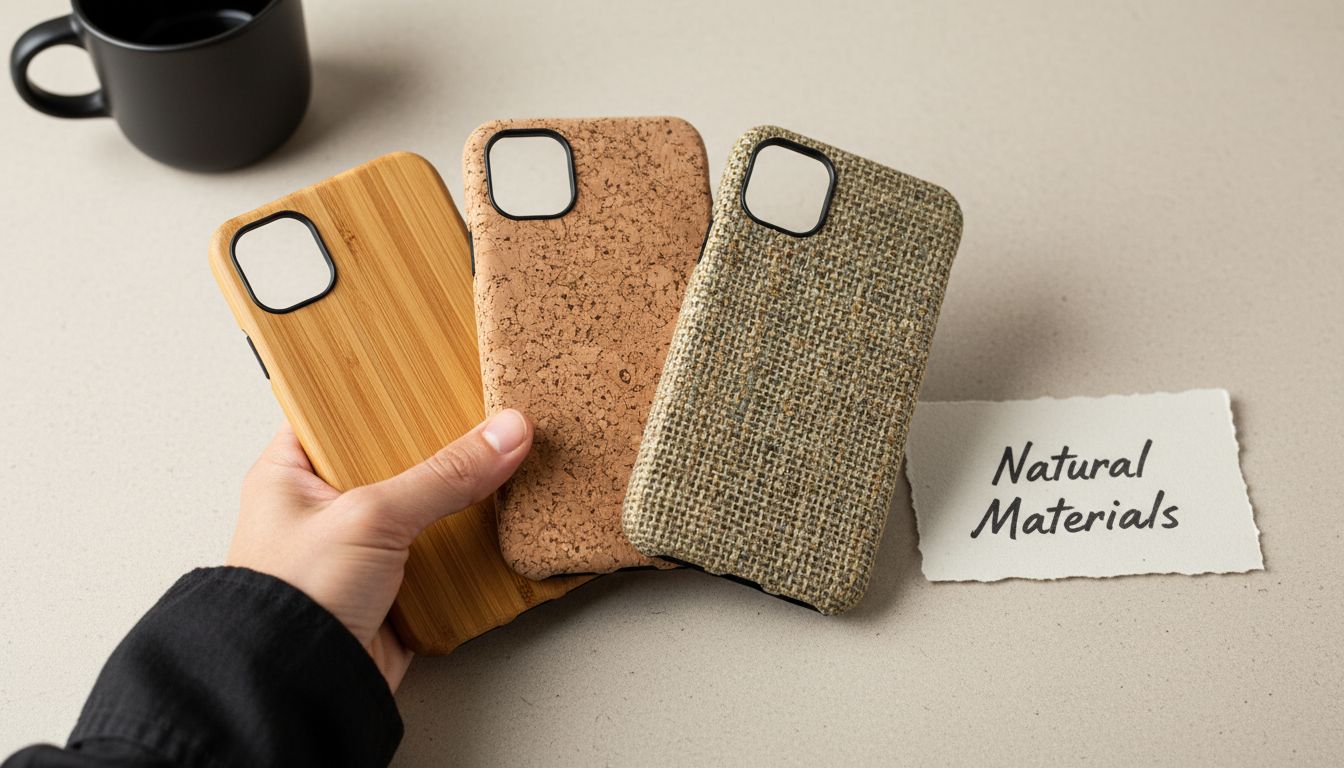
The evolution of plantbased materials represents a significant technological breakthrough in consumer electronics. By utilizing renewable resources and advanced engineering techniques, manufacturers are creating phone cases that protect devices while simultaneously addressing critical environmental challenges. Consumers now have the opportunity to make responsible choices without compromising on quality or protection.
Key Features and How They’re Manufactured
Plantbased phone cases represent a sophisticated fusion of environmental responsibility and cutting-edge technological design. Innovative manufacturing processes transform renewable plant materials into durable, protective smartphone accessories through precision engineering and sustainable techniques.
Key features that distinguish plantbased phone cases include:
- Drop Protection: Multi-layer construction providing shock absorption
- Precise Device Compatibility: Exact molding for seamless smartphone fit
- Raised Edge Design: Enhanced screen and camera lens protection
- Lightweight Construction: Minimal added bulk to device profile
- Biodegradability: Complete decomposition within specified timeframes
The manufacturing process involves several critical stages of material preparation and case development. Initially, raw plant-based materials undergo extensive processing to create biomaterials with sufficient strength and flexibility. Advanced molding techniques allow manufacturers to create cases with intricate designs and precise device specifications. These techniques ensure that eco-friendly phone case technologies maintain structural integrity while minimizing environmental impact.
Beyond technical specifications, plantbased phone cases represent a commitment to sustainable consumer electronics. Manufacturers carefully balance material performance, environmental responsibility, and aesthetic design to create accessories that not only protect devices but also reflect a conscientious approach to technology consumption. By choosing plantbased cases, consumers participate in a broader movement toward reducing plastic waste and supporting innovative, environmentally responsible manufacturing practices.
Sustainability Benefits and Eco Impact
Plantbased phone cases represent a transformative approach to reducing environmental waste in consumer electronics. Circular life cycle design enables these innovative accessories to break down naturally or be completely recycled, dramatically minimizing the ecological footprint associated with traditional plastic phone protection.
Key sustainability benefits include:
- Reduced Carbon Emissions: Lower manufacturing energy requirements
- Biodegradable Materials: Complete decomposition without long-term environmental contamination
- Renewable Resource Utilization: Leveraging agricultural byproducts and sustainable plant materials
- Waste Reduction: Minimal landfill impact compared to petroleum-based alternatives
- Ecosystem Conservation: Supporting manufacturing processes that minimize environmental disruption
The environmental impact extends beyond material composition. Eco-friendly phone case technologies actively contribute to broader sustainability efforts by demonstrating how innovative design can transform consumer habits. Manufacturers are developing manufacturing processes that not only reduce waste but also create closed-loop production systems where materials can be continuously recycled or safely returned to natural ecosystems.
By choosing plantbased phone cases, consumers become direct participants in a global movement toward more responsible technology consumption. These accessories represent more than just device protection – they symbolize a commitment to environmental stewardship, proving that technological innovation and ecological consciousness can coexist harmoniously in everyday consumer choices.
Comparing Plantbased and Traditional Phone Cases
The landscape of smartphone protection has dramatically transformed with the emergence of plantbased phone cases, challenging the long-standing dominance of traditional petroleum-based accessories. Eco-friendly phone case technologies represent a significant leap forward in addressing both device protection and environmental sustainability.
Key differences between plantbased and traditional phone cases include:
-
Material Composition:
- Plantbased: Renewable, biodegradable organic materials
- Traditional: Petroleum-based plastics with long-term environmental impact
-
Environmental Footprint:
- Plantbased: Minimal waste, compostable end-of-life cycle
- Traditional: Contributes to plastic pollution and extended landfill waste
-
Manufacturing Process:
- Plantbased: Lower energy consumption, sustainable resource utilization
- Traditional: High carbon emissions, reliance on non-renewable resources
-
Durability:
- Plantbased: Advanced biomaterials offering comparable protection
- Traditional: Consistent but environmentally harmful protection
Protective capabilities represent another critical point of comparison. Contrary to common misconceptions, plantbased phone cases deliver performance on par with traditional options. Advanced engineering techniques allow manufacturers to create cases that provide robust shock absorption, precise device fitment, and reliable protection against everyday wear and tear.
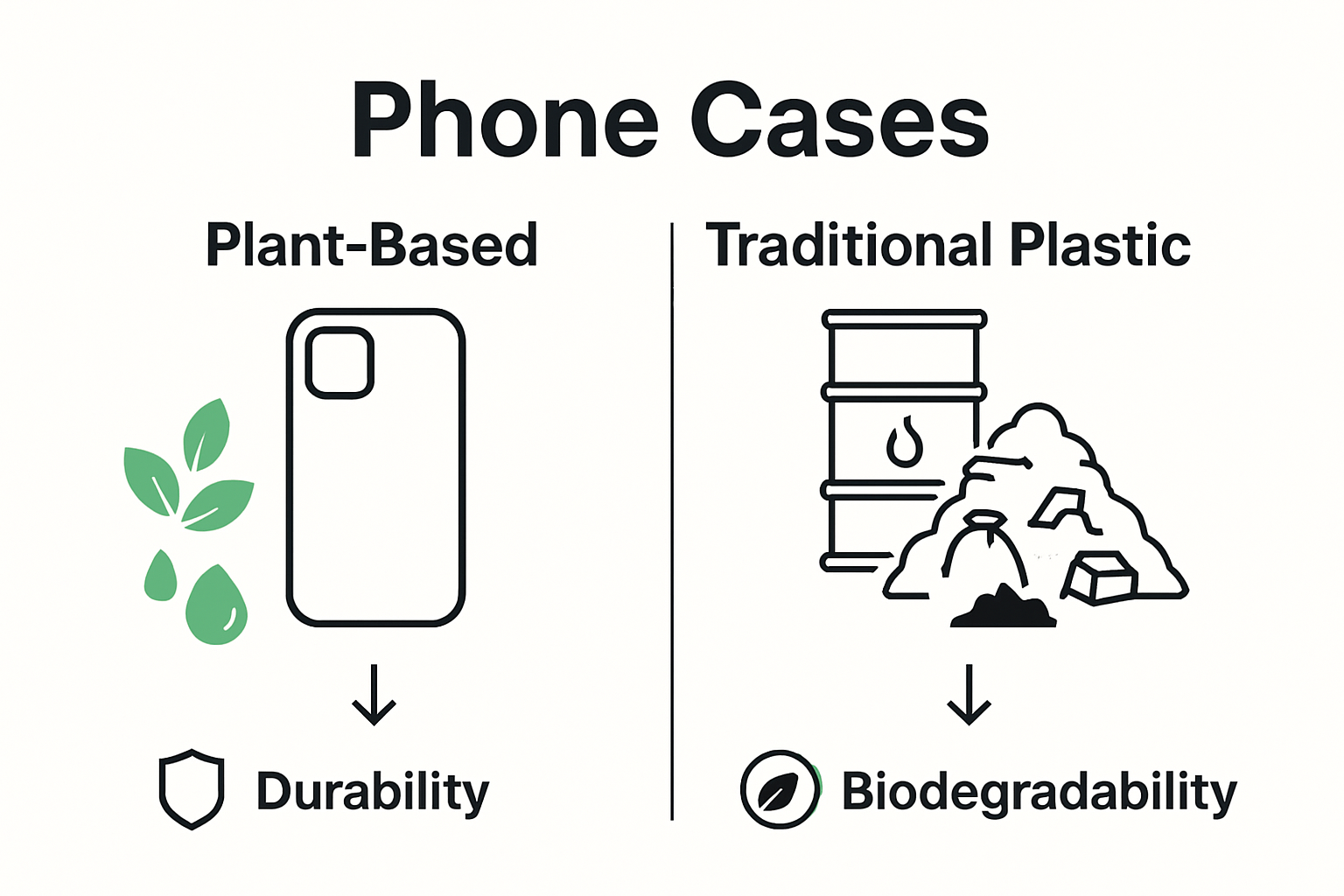
Ultimately, the choice between plantbased and traditional phone cases extends beyond mere device protection. Consumers now have the opportunity to make a meaningful environmental statement through their accessory choices. By selecting plantbased cases, individuals can simultaneously protect their smartphones and contribute to a more sustainable technological ecosystem.
Discover True Protection with Plantbased Phone Cases You Can Trust
If you are looking for a phone case that merges durable device protection with genuine environmental responsibility you have found the perfect match. The challenge explored in the article highlights the need for cases that are not only eco-friendly but also tough enough for daily use. At Tallpine Cases we specialize in creating plantbased and compostable phone cases using advanced biomaterials that offer the protection your phone deserves without compromising the planet.
Experience firsthand how you can support sustainability while enjoying style and strength. Visit Tallpine Cases today to explore our unique collection of eco-conscious phone accessories. Learn more about the revolutionary eco-friendly phone case technologies that make our plantbased cases stand out and see why choosing biodegradable options is the smartest choice for your device and the environment. Don’t wait to join the movement toward smarter technology protection with exclusive offers ready for you now.
Frequently Asked Questions
What materials are used in plantbased phone cases?
Plantbased phone cases are made from renewable organic materials like polylactic acid (PLA), bamboo fiber, cork, hemp derivatives, and recycled agricultural waste. These materials are chosen for their sustainability and durability.
How do plantbased phone cases compare to traditional plastic cases?
Plantbased phone cases are made from biodegradable materials and have a lower environmental impact. They offer comparable protective capabilities to traditional plastic cases, including drop protection and shock absorption, while being compostable at the end of their lifecycle.
Are plantbased phone cases durable?
Yes, modern plantbased phone cases are designed to be durable and provide robust protection for smartphones. They undergo rigorous testing to ensure they can withstand everyday drops and impacts while maintaining their structural integrity.
What are the sustainability benefits of using plantbased phone cases?
Plantbased phone cases significantly reduce carbon emissions during manufacturing, are made from biodegradable materials that decompose without long-term environmental contamination, and utilize renewable resources. This helps minimize landfill waste and supports ecosystem conservation.