
Every year, millions of households throw away old phone cases without realizing their true environmental impact. With phone accessories contributing significant waste to landfills, responsible recycling has become more than a trendy idea—it is a necessity. This guide reveals simple steps to help you assess, sort, and recycle your old cases, making it easy to reduce your environmental footprint and support a healthier planet.
Table of Contents
- Step 1: Gather and Inspect Your Old Phone Cases
- Step 2: Sort Cases by Material Type
- Step 3: Research Local and Online Recycling Options
- Step 4: Clean and Prepare Cases for Recycling
- Step 5: Verify Proper Recycling or Reuse
Quick Summary
| Key Message | Explanation |
|---|---|
| 1. Gather and inspect old phone cases | Collect and evaluate your phone cases for material type and condition to determine recycling needs. |
| 2. Sort cases by material type | Categorize phone cases into distinct groups based on material, facilitating easier recycling processes. |
| 3. Research local and online recycling options | Look for specialized recycling programs that accept your sorted materials to ensure proper disposal. |
| 4. Clean and prepare cases thoroughly | Clean and remove accessories from cases before recycling to improve processing efficiency and reduce contamination. |
| 5. Verify proper recycling or reuse | Confirm the recycling program’s legitimacy and explore reuse options for cases if recycling isn’t feasible. |
Step 1: Gather and Inspect Your Old Phone Cases
Starting your eco-friendly phone case recycling journey begins with a careful collection and inspection process. Take some time to gather all the old phone cases you have accumulated over the years, pulling them from drawers, storage boxes, and forgotten corners of your living space. Proper disposal requires understanding what you have and assessing each case’s condition and material composition.
As you collect your cases, examine them for potential hazardous substances that could impact environmental safety. Look for signs of wear like cracks, discoloration, or material breakdown which might indicate complex recycling requirements. Separate your cases by material type plastic, silicone, biodegradable materials, or mixed composites as this will help determine the most appropriate recycling method. Some cases may be suitable for direct recycling, while others might need specialized processing to prevent environmental contamination.
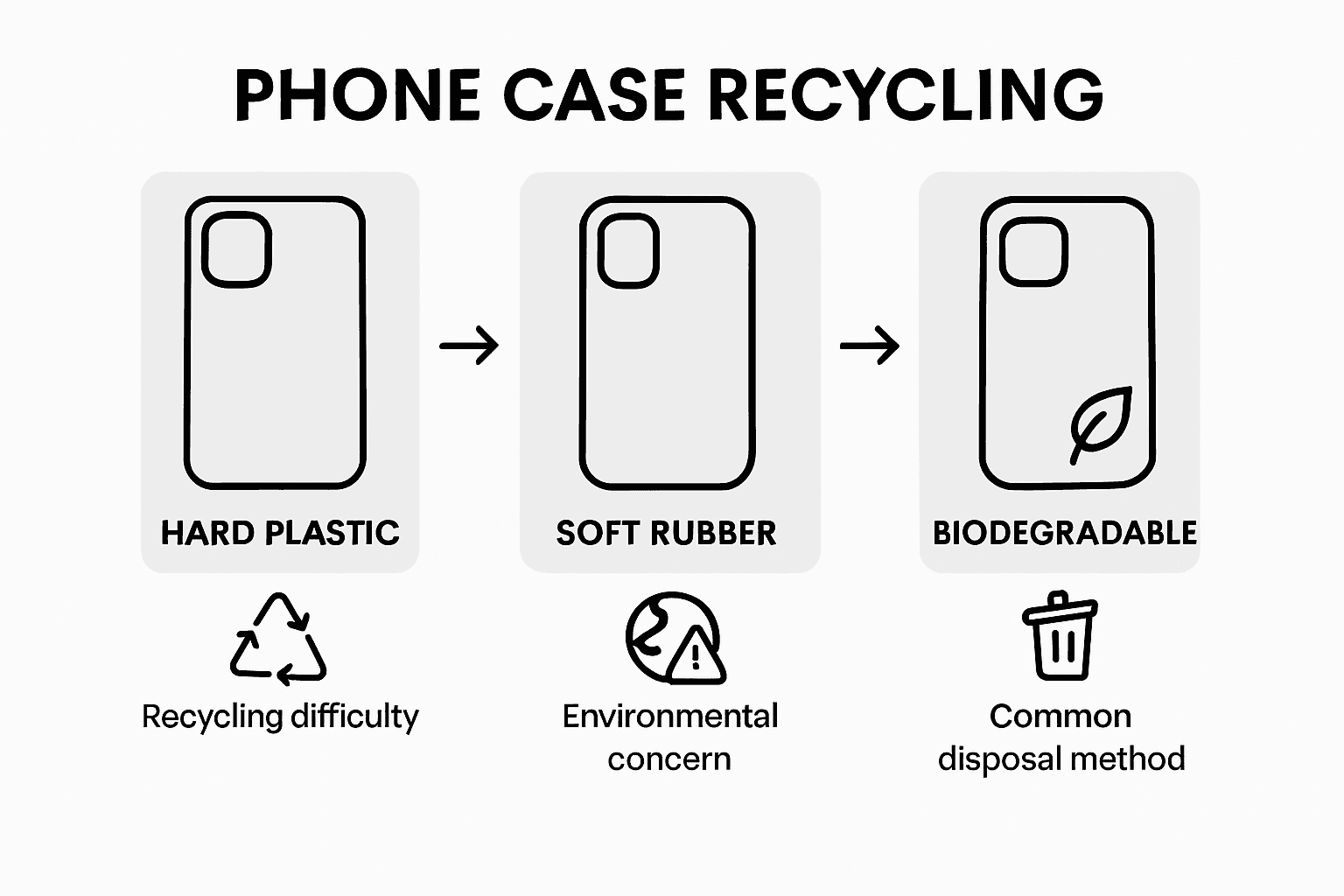
Organize your collection into clear categories hard plastic, soft rubber, biodegradable materials, and cases with metal components. This initial sorting will streamline your recycling efforts and help you identify which cases can be easily processed and which might require more specialized disposal techniques.
Here’s a quick comparison of common phone case materials and their recycling challenges:
| Material Type | Typical Recycling Difficulty | Main Environmental Concern | Common Disposal Method |
|---|---|---|---|
| Hard Plastic | Moderate | May contain non-recyclable plastics | Curbside or special program |
| Silicone/Rubber | High | Does not decompose, complex polymers | Specialized recycling |
| Biodegradable Case | Low | Requires proper composting environment | Composting facility |
| Mixed/Metal Elements | Very High | Separation needed, may contain metals | Manual disassembly first |
Pro Tip: Before recycling, clean each phone case thoroughly with a mild disinfectant to remove dirt and residue, which can complicate the recycling process and potentially contaminate other materials.
Step 2: Sort Cases by Material Type
Effective phone case recycling starts with understanding the material composition of your collection. Phone cases often contain complex material combinations that require specialized recycling approaches, making careful sorting essential for responsible disposal.
Begin by creating distinct sorting categories for your phone cases. Mixed material compositions can complicate standard recycling processes, so precision is key. Establish clear groups such as hard plastic cases, silicone cases, rubber variants, biodegradable materials, and cases with metal or electronic components. Use separate containers or labeled bags to keep these categories distinct and prevent cross contamination during the recycling process.
Carefully examine each case to determine its primary material type. Look for manufacturer markings, material texture, and flexibility as indicators of composition. Transparent hard plastic cases typically differ from flexible silicone options, and biodegradable cases will have unique characteristics. Pay special attention to cases with multiple material layers or integrated metal components, as these may require separate handling or specialized recycling streams.
Pro Tip: Use a simple color coded system with colored stickers or markers to quickly identify and separate different material types during your sorting process.
Step 3: Research Local and Online Recycling Options
Navigating the world of phone case recycling requires strategic research to find the most appropriate disposal methods for your sorted materials. Several specialized recycling programs exist that accept phone cases from various brands, offering environmentally responsible alternatives to traditional waste disposal.
Start by exploring local options through your city or county waste management website. Check for electronic waste recycling events, specialized drop off centers, or municipal recycling programs that handle complex material items. Many electronics stores and mobile phone retailers also offer recycling services for accessories like phone cases. Expand your search to include online recycling programs that specialize in hard to recycle materials.
Consider reaching out to manufacturer specific recycling initiatives like the PopSockets4 Recycling Program, Close the Loop Recycling Program, and Pela 360 Recycling Program. These programs often accept cases regardless of their original brand and provide comprehensive recycling solutions for materials that traditional recycling streams cannot process. Some programs even offer incentives like store credits or discounts on future purchases for participating in their recycling efforts.
Pro Tip: Create a digital spreadsheet to track the recycling options you discover, including contact information, accepted materials, and any potential fees or requirements for each program.
Here are notable phone case recycling programs and their main features:
| Program Name | Accepted Materials | Incentives Offered | How to Participate |
|---|---|---|---|
| PopSockets4 Recycling | All brands, plastic cases | Discounts or credits | Mail-in, drop-off options |
| Pela 360 Recycling | Biodegradable, most materials | Store credit or discounts | Online submission, mail-in |
| Close the Loop | Most case materials, metals | Eco-impact reporting, credits | Prepaid shipping, drop-off |
Step 4: Clean and Prepare Cases for Recycling
Before sending your phone cases to recycling, thorough preparation is crucial to ensure they are processed efficiently. Inspecting and tidying up your cases is an essential step in the recycling preparation process, helping to streamline the recycling workflow and improve material recovery rates.

Begin by thoroughly cleaning each phone case using a gentle cleaning solution. Use mild soap and warm water to remove dirt, grime, and any adhesive residues. For stubborn stains, create a mixture of water and white vinegar to help break down built up grime without damaging the case material. Carefully scrub the surface with a soft bristled brush or microfiber cloth, paying extra attention to corners and textured areas where dirt can accumulate. Rinse the cases completely and allow them to air dry completely before packaging for recycling.
Remove all additional accessories attached to the cases including screen protectors, pop sockets, card holders, or any integrated clips or stands. These additional components often require separate recycling processes and can complicate the recycling of the main phone case. Check that the cases are free from electronic components, batteries, or metal parts that might need special handling. Ensure the cases are completely dry, free from debris, and packaged according to the specific requirements of your chosen recycling program.
Pro Tip: Take photographs of your cleaned cases before sending them for recycling, documenting their condition and helping you track your personal contribution to electronic waste reduction.
Step 5: Verify Proper Recycling or Reuse
The final stage of responsible phone case disposal involves carefully confirming that your cases will be processed through legitimate recycling channels. Some innovative programs transform old phone cases into new raw materials through specialized recycling processes, offering environmentally conscious consumers practical solutions for electronic accessory waste.
Several recycling services now provide incentive programs that reward sustainable disposal efforts, making it easier to responsibly manage your old phone cases. Contact your selected recycling program to confirm their specific requirements and verify that your prepared cases meet their acceptance criteria. Some programs offer drop off locations, while others provide prepaid shipping labels for convenient mail in recycling. Carefully review their guidelines to ensure your cases will be properly processed and not accidentally diverted to landfill waste streams.
Consider alternative reuse options if traditional recycling proves challenging. Creative possibilities include donating cases to art programs, using them for craft projects, or repurposing them as protective covers for small electronics or storage containers. Some local schools or community centers might welcome donations of clean phone cases for educational or artistic purposes, extending the lifecycle of these materials beyond their original intended use.
Pro Tip: Request a confirmation or tracking number from your recycling program to document your environmental contribution and ensure your cases are properly processed.
Make Your Phone Protection Part of the Recycling Solution
Recycling old phone cases can be challenging because of their mixed materials and complex disposal needs. You want to make sure your efforts to recycle are truly eco-friendly and effective. Choosing the right replacement case can help you reduce future waste by opting for plant-based, compostable materials designed specifically for sustainable use and easy disposal. At Tallpinecases.com, our collection of eco-conscious options like the iPhone 15 Pro Cases makes it simple to protect your phone while protecting the planet.
Start your eco-friendly journey with high-quality cases that prioritize durability, style, and sustainability. Visit Tallpinecases.com today to explore our full selection including the latest iPhone 15 Pro Max Cases and iPhone 15 Plus Cases. Join a community of tech-savvy individuals who care about reducing landfill waste and supporting carbon offset initiatives. Make the switch now and enjoy special promotions that reward your commitment to the environment.
Frequently Asked Questions
How should I gather and inspect my old phone cases for recycling?
Start by collecting all your old phone cases from various locations in your home. Inspect each case for wear and categorize them by material type, such as hard plastic, silicone, or biodegradable materials to prepare for recycling.
What are the main steps in sorting phone cases by material type?
Begin by creating distinct categories based on materials, such as hard plastics, rubber, and biodegradable cases. Use separate containers to keep these categories organized and prevent contamination during the recycling process.
How do I find suitable recycling options for my old phone cases?
Research local recycling programs or events through municipal waste management websites for specialized drop-off centers. Additionally, consider online recycling programs that accept cases made from various materials; track your findings in a digital spreadsheet to stay organized.
What preparation is needed before sending my phone cases to recycling?
Thoroughly clean each phone case using a gentle soap solution to remove any dirt or residue. Ensure they are completely dry, free from additional parts like screen protectors, and ready for processing according to your chosen recycling program’s requirements.
How can I verify that my old phone cases will be recycled properly?
Contact your selected recycling program to confirm their requirements and ensure that your cases meet their acceptance criteria. Request a confirmation or tracking number when you submit your cases to document their proper disposal and recycling.
Are there alternative ways to reuse old phone cases if recycling isn’t an option?
Yes, consider donating your old phone cases to local art programs or schools for creative projects. You can also repurpose them as protective covers for small electronics or storage containers, extending their lifecycle beyond their original use.