
Over 90 million phone cases end up in landfills every year, contributing to growing waste problems. With more people searching for eco friendly options, recognizing which phone cases are actually compostable has become a key challenge. You will gain practical tips on checking compostability, preparing your case, and finding responsible disposal options, helping you make choices that really benefit the environment.
Table of Contents
- Step 1: Identify Compostable Features of Your Phone Case
- Step 2: Prepare Your Phone Case for Composting
- Step 3: Find Suitable Composting Facilities or Options
- Step 4: Compost Your Phone Case Correctly at Home or Locally
- Step 5: Verify Full Breakdown and Compost Quality
Quick Summary
| Key Point | Explanation |
|---|---|
| 1. Assess your phone case materials | Verify if your phone case is made from compostable materials like cornstarch or bamboo fiber for responsible disposal. |
| 2. Prepare phone case for composting | Clean your case thoroughly and remove any non-compostable parts to ensure successful decomposition. |
| 3. Identify local composting options | Research local facilities or community programs that accept biodegradable materials for proper disposal. |
| 4. Compost at the right conditions | Maintain a balanced compost environment with appropriate temperature and moisture for effective breakdown. |
| 5. Confirm complete decomposition | Regularly check your compost for fully broken down materials, ensuring no harmful residues remain after composting. |
Step 1: Identify Compostable Features of Your Phone Case
Identifying the compostable features of your phone case is a crucial first step toward responsible environmental disposal. Understanding what makes a phone case truly compostable will help you make informed decisions about its end of life recycling process.
To determine if your phone case is genuinely compostable, start by examining its materials and manufacturing details. Genuine compostable phone cases like those from Tallpine Cases are typically made from plant-based materials such as corn starch, bamboo fiber, or other organic compounds that can naturally break down without leaving harmful residues. Look for clear labeling that specifies the case is 100% biodegradable and provides specific decomposition timeframes.
Check the product packaging or manufacturer’s website for specific compostability certifications. Legitimate compostable phone cases will often have third-party certifications indicating they meet industrial composting standards like ASTM D6400 or EN 13432. These certifications ensure the product can fully decompose in commercial composting facilities within a specified timeframe without releasing toxic chemicals.
Pro tip: Keep your product documentation and original packaging, as they often contain critical information about the case’s compostable characteristics and proper disposal methods.
Here’s a comparison of compostable phone case materials and their properties:
| Material Type | Typical Source | Time to Decompose | Composting Requirement |
|---|---|---|---|
| Corn Starch | Agricultural crops | 3-6 months | Industrial or home possible |
| Bamboo Fiber | Bamboo plants | 6-12 months | High heat preferred |
| PLA Bioplastic | Corn, sugarcane | 6-24 months | Best in industrial facility |
| Wheat Straw | Grain byproduct | 3-8 months | Needs moist compost system |
Step 2: Prepare Your Phone Case for Composting
Preparing your compostable phone case for proper disposal is a critical step in ensuring its environmentally friendly breakdown. This process involves carefully cleaning and removing any non compostable components to guarantee successful composting.
Start by thoroughly cleaning your phone case to remove any dirt, debris, or residual adhesives. Gently wash the case with mild water and a soft cloth, ensuring you do not use harsh chemicals that might compromise its biodegradable properties. If your compostable phone case comes in vibrant colors like red, make sure to clean it carefully without damaging its surface integrity.
Next, carefully inspect the case and remove any non compostable attachments such as metal buttons, plastic clips, or silicone edges. These components cannot decompose and must be separated before composting. Check the manufacturer’s guidelines for specific disassembly instructions, as some cases might have unique design features that require special handling.
Pro tip: Contact your local composting facility beforehand to confirm they accept biodegradable phone accessories, as composting requirements can vary between different municipal waste management systems.
Step 3: Find Suitable Composting Facilities or Options
Locating the right composting facility for your biodegradable phone case requires careful research and understanding of local waste management infrastructure. Your goal is to ensure that your environmentally conscious disposal efforts actually result in proper decomposition.
Start by contacting your local municipal waste management office or recycling center. Many urban areas now have industrial composting facilities that can handle specialized biodegradable materials. Compostable phone cases designed for industrial composting facilities require specific processing conditions, so it is crucial to verify their exact acceptance criteria. Some facilities might require you to remove additional components or follow specific preparation guidelines before dropping off your phone case.
If municipal composting is unavailable, explore alternative options such as community gardens, agricultural composting sites, or specialized ecological waste management centers. Online resources and environmental sustainability groups can often provide localized recommendations for responsible phone case disposal. Consider reaching out to local environmental organizations or zero waste community groups who might have detailed insights into composting options in your specific area.
Pro tip: Create a spreadsheet tracking local composting facilities, their contact information, and specific requirements for biodegradable electronic accessories to streamline your future sustainable disposal efforts.
Step 4: Compost Your Phone Case Correctly at Home or Locally
Composting your biodegradable phone case requires careful attention to ensure proper decomposition and minimal environmental impact. Understanding the specific requirements for breaking down these specialized accessories will help you dispose of them responsibly.
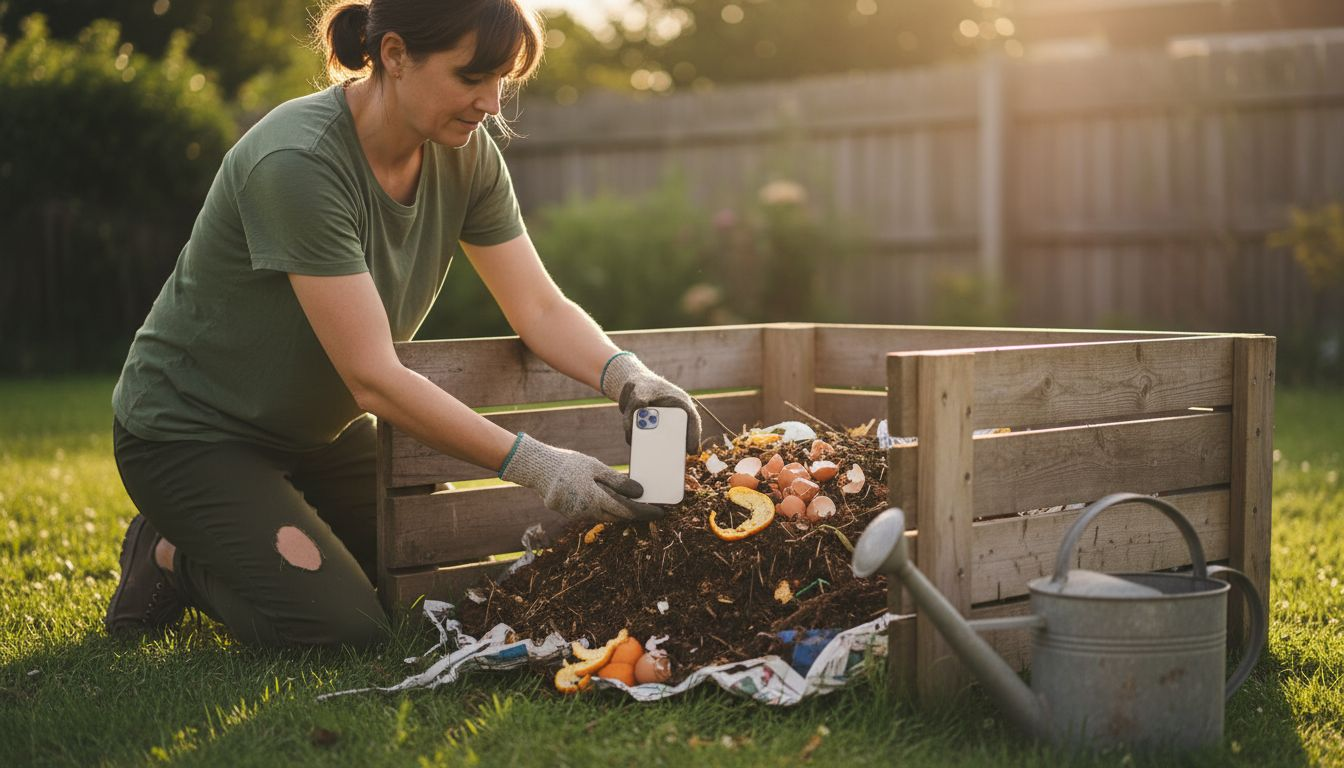
Compostable phone cases designed for industrial composting facilities typically need specific conditions to break down effectively. If you are composting at home, select a well maintained compost bin with consistent temperature and moisture levels. Break the phone case into smaller pieces to accelerate decomposition, which helps microorganisms process the material more quickly. For home composting, focus on maintaining a balanced carbon to nitrogen ratio and turning your compost pile regularly to ensure proper aeration.
If home composting seems challenging, consider community composting programs or local agricultural sites that accept biodegradable materials. Some gardening centers and ecological waste management facilities have specialized composting processes capable of breaking down complex organic materials like phone cases. Always confirm the specific requirements and guidelines with the facility beforehand to ensure your case will be properly processed.
Pro tip: Monitor your compost pile temperature and moisture levels closely, aiming to maintain a consistent environment between 130 and 150 degrees Fahrenheit to optimize biodegradation of your phone case.
Step 5: Verify Full Breakdown and Compost Quality
Verifying the complete breakdown of your compostable phone case is an essential final step in the responsible disposal process. This stage ensures that your environmental efforts have successfully transformed the material into nutrient rich compost without leaving harmful residues.

Carefully examine your compost pile after several weeks to months, looking for visual and textural indicators of complete decomposition. Fully broken down phone case materials should appear dark, crumbly, and indistinguishable from surrounding organic matter. If you notice any remaining plastic fragments or undecomposed sections of the compostable phone case from Tallpine Cases, continue monitoring and turning the compost to support further breakdown.
Conduct a simple degradation test by attempting to crush the remaining material between your fingers. Properly decomposed compost should feel soft and easily disintegrate, indicating that microorganisms have successfully processed the phone case materials. Check the overall compost color, which should be a rich dark brown or nearly black, signaling complete organic transformation. If significant portions remain intact, you may need to adjust your composting conditions or seek specialized industrial composting services.
The table below summarizes signs your composted phone case has fully broken down:
| Indicator | Description | Why It Matters |
|---|---|---|
| Dark, crumbly appearance | Looks like rich soil | Shows full decomposition |
| No visible fragments | Case pieces no longer visible | Confirms breakdown is complete |
| Soft to the touch | Material crushes easily | Indicates organic matter only |
| Uniform brown/black color | Consistent dark finished compost | Ensures compost is ready |
Pro tip: Take periodic photographs of your compost pile to document the gradual breakdown process and help you understand the decomposition timeline for biodegradable phone case materials.
Protect Your Phone and Planet with Compostable Cases from Tallpine Cases
Disposing of compostable phone cases responsibly starts with choosing the right case designed for the environment. If you want to avoid confusion about composting and make a positive impact, explore our Biodegradable Phone Case | Phone Case Collection – Tallpine Cases. Each case is crafted from plant-based materials that meet industrial composting standards so you can protect your phone without harming the planet.
Ready to make a smart, eco-friendly choice today? Visit Tallpinecases.com to find unique, sustainable phone cases available for iPhone models including the iPhone 12 Mini Cases – Tallpine Cases and iPhone 13 Mini Cases – Tallpine Cases. Shop now and join a growing community committed to reducing waste through stylish, compostable protection. Act now to enjoy free shipping offers and help support our tree planting and carbon offset initiatives.
Frequently Asked Questions
How do I identify if my phone case is compostable?
You can identify if your phone case is compostable by checking its materials and any certifications on the packaging or manufacturer’s website. Look for plant-based materials like corn starch or bamboo fiber and ensure it has third-party certifications indicating compliance with composting standards.
What steps do I need to take to prepare my compostable phone case for composting?
To prepare your compostable phone case for composting, first clean it thoroughly to remove any dirt or residue. Then, carefully remove any non-compostable parts, such as metal buttons or plastic attachments, to ensure the composting process is effective.
How do I find a suitable composting facility for my phone case?
Locate a suitable composting facility by contacting your local waste management office or recycling center. Ask them if they accept compostable materials like phone cases and verify their specific requirements for dropping off your case.
What should I do if I want to compost my phone case at home?
If you want to compost your phone case at home, break it into smaller pieces to speed up decomposition and maintain a well-kept compost bin with balanced moisture and temperature. Monitor conditions closely to ensure optimal decomposition, ideally maintaining temperatures between 130 and 150 degrees Fahrenheit.
How can I verify that my compostable phone case has fully decomposed?
You can verify that your compostable phone case has fully decomposed by looking for a dark, crumbly appearance and ensuring no visible fragments remain. Conduct a test by crushing the material; properly decomposed compost should be soft and crumble easily between your fingers.
What signs indicate that the compost quality is good after decomposing my phone case?
Good quality compost after decomposing your phone case should appear uniformly dark brown or black, similar to rich soil. Ensure it feels soft and has no remaining plastic fragments, confirming the organic matter has fully broken down.