
Most American shoppers underestimate the impact of their tech choices on the environment, yet over 252,000 products globally now carry eco certifications as proof of sustainability. With smartphones in nearly every American hand, picking the right phone case goes beyond just style or protection. Unlocking the meaning behind eco certifications helps you truly support greener manufacturing and responsible materials, making it easier to align your personal values with the products you use every day.
Table of Contents
- Eco Certifications And Phone Cases Explained
- Major Types Of Environmental Certifications
- Certification Requirements And Evaluation Criteria
- Misconceptions About Eco-Friendly Phone Cases
- Compliance Benefits And Real-World Impacts
Key Takeaways
| Point | Details |
|---|---|
| Understanding Eco Certifications | Eco certifications provide essential insights into a product’s environmental impact, aiding consumers in making informed choices for sustainable phone cases. |
| Types of Certifications | Familiarizing oneself with Type I, Type II, and Type III certifications helps clarify product claims and ensures higher confidence in sustainability claims. |
| Misconceptions about Cost and Protection | Many consumers wrongly believe that eco-friendly phone cases are expensive and less protective; modern materials often match or exceed traditional options in both price and performance. |
| Real-World Benefits of Certification | Eco-certified phone cases contribute to reduced plastic waste, lower carbon emissions, and promote sustainable manufacturing practices in the technology industry. |
Eco Certifications and Phone Cases Explained
Sustainable phone accessories have become increasingly important in our technology-driven world. When shopping for environmentally responsible phone cases, understanding eco certifications can help you make informed purchasing decisions. These voluntary labeling systems provide critical insights into a product’s environmental impact, helping consumers choose items that align with their ecological values.
Eco certifications like ecolabels represent comprehensive assessments of a product’s entire lifecycle, from raw material extraction through manufacturing and disposal. For phone cases specifically, these certifications evaluate factors such as material sustainability, carbon footprint, chemical composition, and potential for recycling or biodegradation. Organizations like Green Seal play a pivotal role in establishing rigorous standards that manufacturers must meet to receive official environmental credentials.
Key aspects evaluated by eco certifications for phone cases typically include:
- Renewable or recycled material composition
- Manufacturing process emissions
- Biodegradability potential
- Chemical safety standards
- Minimal packaging waste
Consumers seeking truly sustainable phone cases should look beyond marketing claims and seek products with verified third-party certifications. These labels provide transparent, scientifically backed evidence of a product’s environmental performance, helping you make choices that reduce ecological impact while protecting your mobile device. By understanding and prioritizing eco-friendly phone case designs, you contribute to broader efforts of responsible consumer electronics consumption.
Major Types of Environmental Certifications
Understanding the landscape of environmental certifications requires familiarity with different classification systems. The International Organization for Standardization (ISO) has developed a comprehensive framework that categorizes environmental labels into three distinct types, each serving a unique purpose in communicating a product’s ecological credentials.

Type I Certifications represent the gold standard of environmental labeling. These third-party verified ecolabels, such as the EU Ecolabel, involve rigorous independent assessment and require products to meet stringent environmental performance criteria. Manufacturers must undergo comprehensive evaluation to receive these prestigious certifications, which provide consumers with high-confidence indicators of genuine sustainability.
The different certification types include:
- Type I: Independent third-party verified ecolabels
- Type II: Self-declared environmental claims
- Type III: Quantified environmental product declarations
On a global scale, the Global Ecolabelling Network (GEN) plays a critical role in standardizing and promoting environmental certification. Representing nearly 60 countries worldwide, GEN members have collectively certified over 252,000 products and services, demonstrating the growing importance of environmental leadership in modern manufacturing. These networks help create transparent, scientifically validated standards that guide consumers toward more sustainable purchasing decisions, particularly in technology accessories like phone cases.
Certification Requirements and Evaluation Criteria
Eco certification for phone cases involves a comprehensive assessment of environmental performance across multiple critical dimensions. Green Seal’s certification process demonstrates the rigorous standards manufacturers must meet, evaluating products based on performance, health, and sustainability criteria that go far beyond surface-level environmental claims.
Chemical safety represents a crucial aspect of certification evaluations. The GreenScreen for Safer Chemicals standard provides a transparent methodology for assessing chemical hazards, prioritizing the elimination of substances with significant environmental and health risks. This approach focuses on identifying and avoiding potentially harmful compounds such as carcinogens, endocrine disruptors, and other toxic materials that could compromise both environmental and human health.
Key evaluation criteria for phone case certifications typically include:
- Material sourcing and sustainability
- Manufacturing process emissions
- Chemical composition and toxicity
- Product lifecycle assessment
- Potential for recycling or biodegradation
- Energy consumption during production
- Packaging waste reduction
Companies seeking certification must demonstrate a holistic commitment to environmental responsibility. This means providing comprehensive documentation that traces a product’s entire lifecycle, from raw material extraction through final disposal. The most robust certifications require manufacturers to prove not just minimal environmental impact, but active contributions to sustainable manufacturing practices. By setting such stringent standards, these certification processes ensure that environmentally conscious consumers can make informed purchasing decisions with confidence.
Misconceptions About Eco-Friendly Phone Cases
Environmentally conscious consumers often encounter numerous myths surrounding eco-friendly phone cases that can discourage potential buyers. Cost-related misconceptions represent one of the most prevalent misunderstandings, with many people assuming sustainable accessories are prohibitively expensive. Contrary to popular belief, eco-friendly phone cases are typically competitively priced and offer significant long-term value beyond traditional plastic alternatives.
Another common misconception is that sustainable phone cases compromise device protection. Modern eco-friendly cases utilize advanced materials like plant-based polymers, recycled composites, and innovative biodegradable compounds that provide equivalent—and sometimes superior—protection compared to traditional petroleum-based plastic cases. These materials undergo rigorous testing to ensure durability, impact resistance, and comprehensive device safety.
Key misconceptions about eco-friendly phone cases include:
- They are significantly more expensive
- Sustainable materials are less protective
- Limited design and color options
- Reduced overall product quality
- Shorter lifespan compared to traditional cases
Consumers should recognize that choosing eco-friendly phone cases represents a meaningful commitment to environmental responsibility. These products not only protect mobile devices but also contribute to reducing plastic waste, minimizing carbon footprints, and supporting sustainable manufacturing practices. By understanding the true value and capabilities of eco-friendly accessories, individuals can make informed purchasing decisions that align with their environmental values without sacrificing performance or aesthetic preferences.
Compliance Benefits and Real-World Impacts
Eco certifications for phone cases extend far beyond simple marketing claims, representing a critical mechanism for driving meaningful environmental innovation. Eco Rating methodologies provide comprehensive assessments that encourage manufacturers to continuously improve their sustainability practices, creating a dynamic ecosystem of environmental responsibility.
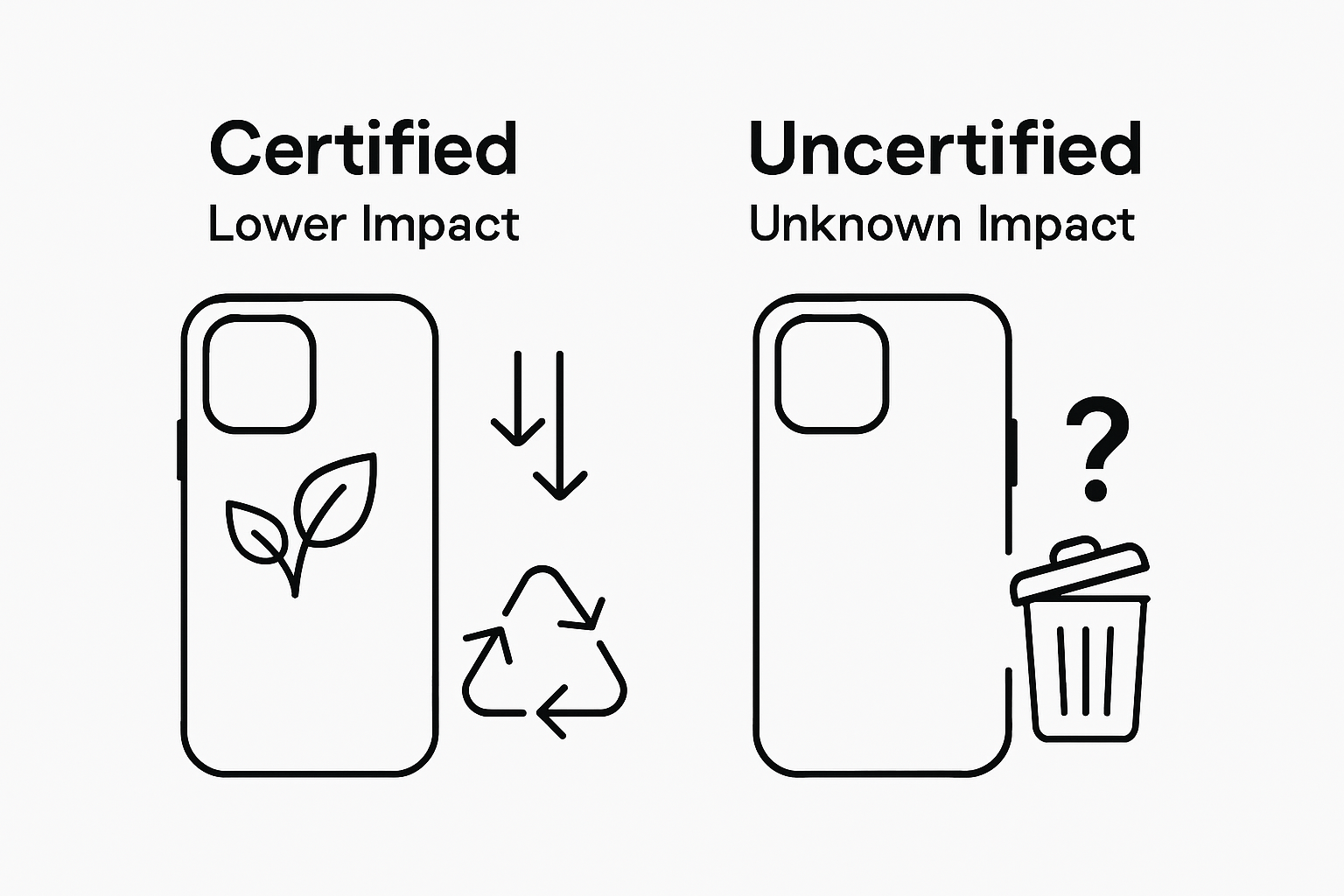
The implementation of eco-design principles has transformative potential across the mobile accessory industry. Eco-innovation research demonstrates that sustainable product development leads to significant reductions in environmental impact, addressing critical challenges like resource consumption, waste generation, and carbon emissions. These approaches go beyond incremental improvements, fundamentally reimagining how mobile accessories can contribute to global sustainability efforts.
Key real-world impacts of eco-certified phone cases include:
- Reduced plastic waste in landfills
- Lower carbon emissions during production
- Support for circular economy principles
- Increased consumer awareness of environmental issues
- Incentivizing sustainable manufacturing practices
Businesses and consumers alike benefit from robust environmental certification systems. By creating transparent standards and measurable benchmarks, these frameworks transform abstract environmental goals into concrete, actionable strategies. The ripple effect extends beyond individual products, inspiring broader systemic changes in manufacturing, material science, and consumer behavior that collectively address our most pressing ecological challenges.
Choose Verified Eco-Friendly Protection with Tallpinecases
Understanding the importance of eco certifications means recognizing the need for phone cases that truly honor sustainability goals. Many consumers face the challenge of distinguishing honest environmentally responsible products from vague marketing claims. By selecting certified eco-friendly phone cases, you ensure your choice supports renewable materials, safer chemicals, and reduced environmental impact throughout the product’s lifecycle.
If you are looking for durable and stylish options backed by genuine commitment to sustainability, explore our range of iPhone 15 Pro Cases.
Act now to elevate your phone protection with products that meet stringent eco criteria and help reduce plastic waste. Visit Tallpinecases.com today for eco-conscious designs that protect both your device and the planet. For other models, check out our iPhone 15 Pro Max Cases and iPhone 15 Plus Cases to find the perfect eco-certified fit.
Frequently Asked Questions
What are eco certifications for phone cases?
Eco certifications for phone cases are voluntary labeling systems that assess a product’s environmental impact throughout its entire lifecycle, including material sourcing, manufacturing processes, emissions, and disposal. They help consumers identify genuinely sustainable products.
Why should I choose a phone case with eco certification?
Choosing a phone case with eco certification ensures you are investing in a product that meets rigorous environmental standards. These certified products typically use renewable or recycled materials, have reduced carbon footprints, and promote safer chemical use, making them a responsible choice.
What key factors are evaluated for eco certifications in phone cases?
Key factors for eco certifications include material composition (such as renewable or recycled content), manufacturing emissions, chemical safety, biodegradability, and packaging waste. These factors collectively determine the overall environmental performance of the product.
Are eco-friendly phone cases effective in protecting my device?
Yes, eco-friendly phone cases are effective in protecting devices. Many use advanced materials like plant-based polymers and recycled composites that can offer equivalent or superior protection compared to traditional plastic cases, ensuring durability and impact resistance.
Recommended
- Best Eco-Friendly Phone Cases 2025 – Expert Comparison – Tallpine Cases
- Eco-Friendly and Sustainable Phone Cases with Unique Designs – Tallpine Cases
- Compostable iPhone Case - Neptune Blue – Tallpine Cases
- Ocean - Eco Case – Tallpine Cases
- Understanding Eco Friendly Routines for Modern Families – The Zoofamily
- Batterien recyceln: Alles, was Sie wissen sollten - accu.blog