
More than eight million tons of plastic end up in the ocean every year, and consumers play a major role in this global problem. For eco-conscious young adults and professionals, choosing stylish, sustainable mobile accessories is a powerful way to shrink your environmental footprint without sacrificing device protection. This guide reveals how innovative bioplastic materials give you greener choices and explores what sets these alternatives apart from traditional options.
Table of Contents
- Defining Bioplastics and Their Origins
- Types of Bioplastics Used in Phone Cases
- Environmental Benefits for Mobile Accessories
- Material Performance and Safety Factors
- Barriers to Adoption and Market Trends
Key Takeaways
| Point | Details |
|---|---|
| Definition of Bioplastics | Bioplastics are sustainable materials derived from renewable sources that reduce environmental impact compared to traditional plastics. |
| Types of Bioplastics | They are categorized into three types based on their biocomposition and biodegradability: bio-based non-biodegradable, bio-based biodegradable, and petroleum-based biodegradable. |
| Environmental Benefits | Bioplastic mobile accessories help reduce carbon emissions and employ renewable resources, contributing to lower ecological footprints in consumer electronics. |
| Challenges to Adoption | High production costs, inconsistent performance, and limited consumer awareness impede the widespread use of bioplastic accessories in the market. |
Defining Bioplastics and Their Origins
Bioplastics represent an innovative class of sustainable materials engineered to address traditional plastic’s environmental challenges. Unlike conventional petroleum-based plastics, these materials derive from renewable biological sources such as agricultural crops, plant starches, and organic waste. Their fundamental distinction lies in their ability to reduce carbon footprint while maintaining similar performance characteristics to standard plastics.
The origins of bioplastics trace back to early 20th-century experiments with natural polymers, but significant technological breakthroughs emerged in the past two decades. Scientists discovered methods to extract complex carbohydrate compounds from corn, sugarcane, and cellulose, transforming these organic materials into durable, flexible plastic alternatives. Molecular engineering techniques now enable manufacturers to create materials with precise mechanical properties matching traditional plastics.
Bioplastics can be categorized into three primary classifications based on their composition and biodegradability:
- Bio-based, Non-biodegradable: Derived from renewable sources but not breaking down easily
- Bio-based, Biodegradable: Created from plant materials and capable of natural decomposition
- Petroleum-based, Biodegradable: Chemically engineered to decompose more rapidly than standard plastics
Pro Tip: Research the specific biodegradability of bioplastic products before purchasing, as not all are created equal in terms of environmental impact and decomposition capabilities.
These materials represent a critical technological evolution in sustainable manufacturing, offering mobile accessory designers and consumers an opportunity to significantly reduce environmental waste while maintaining high-performance product standards.
Types of Bioplastics Used in Phone Cases
Phone case manufacturers are increasingly exploring diverse bioplastic materials to create sustainable mobile accessories that minimize environmental impact. These innovative materials offer unique properties that range from flexible polymers derived from agricultural waste to advanced composites engineered for durability and eco-friendliness. Compostable phone case designs represent a cutting-edge approach to reducing plastic waste in consumer electronics.
The most common bioplastic types utilized in mobile accessory production include:
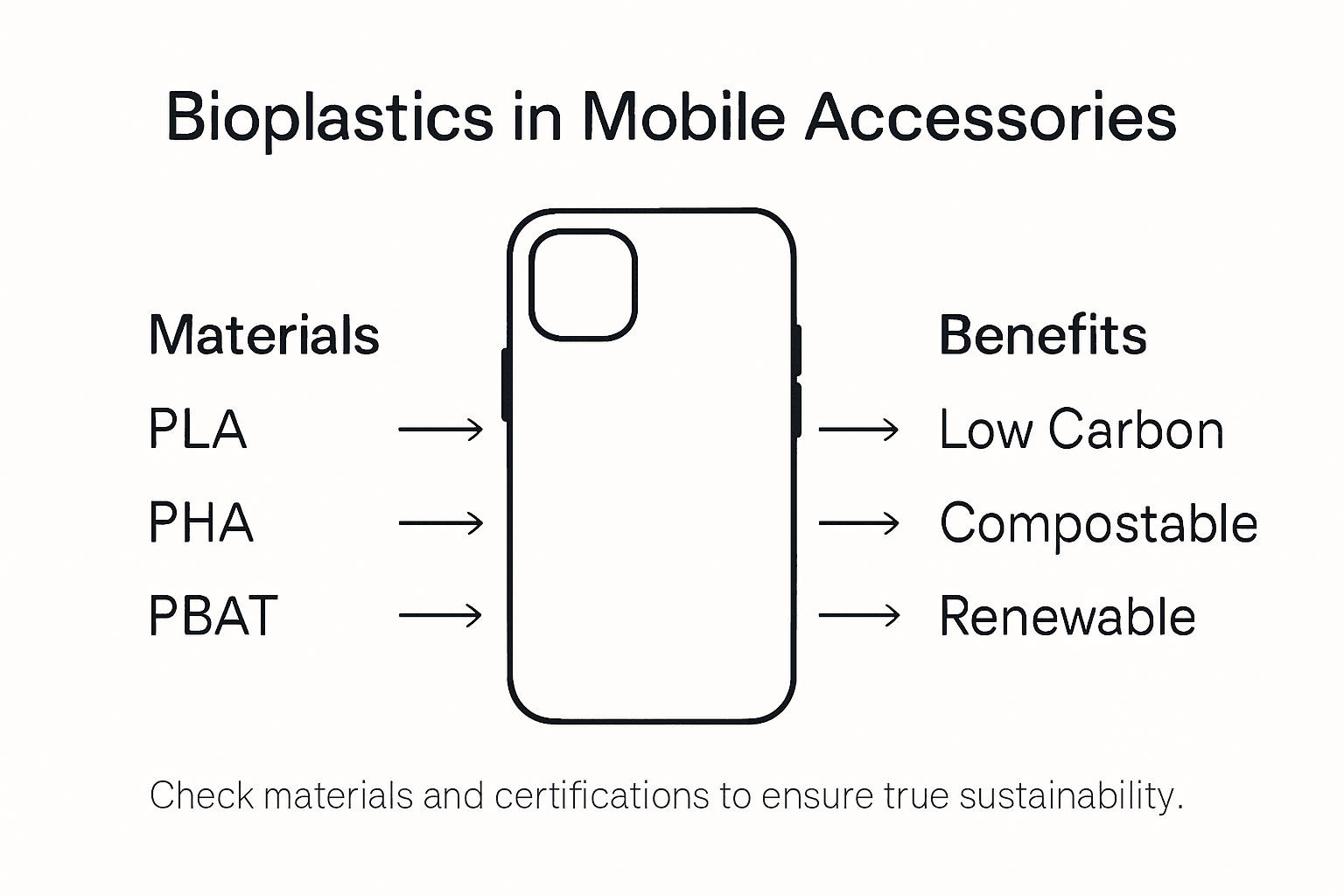
- Polylactic Acid (PLA): Derived from corn starch and sugarcane, offering excellent rigidity and transparency
- Polyhydroxyalkanoates (PHA): Produced through bacterial fermentation, providing exceptional biodegradability
- Cellulose Acetate: Extracted from wood pulp and cotton linters, delivering natural flexibility
- Bio-Polyethylene: Created from sugarcane ethanol, matching traditional plastic’s performance
Manufacturers must carefully balance material properties to ensure phone cases meet critical performance standards while maintaining environmental credentials. Mechanical strength, impact resistance, and long-term durability become paramount considerations when selecting appropriate bioplastic formulations for mobile accessories.
Pro Tip: Always verify the specific biodegradability rating and environmental certifications when choosing bioplastic phone cases to ensure genuine sustainability.
The evolution of bioplastic technologies continues to push boundaries, with researchers developing increasingly sophisticated materials that promise to revolutionize mobile accessory manufacturing through sustainable innovation.
Here’s how the main bioplastic types for phone cases compare:
| Material | Sourcing Method | Durability Level | Biodegradability Potential |
|---|---|---|---|
| Polylactic Acid | Corn starch, sugarcane | Moderate to high | Industrial compostable |
| Polyhydroxyalkanoates | Bacterial fermentation | Good flexibility | Home and soil compostable |
| Cellulose Acetate | Wood pulp, cotton linters | Moderate, flexible | Partially biodegradable |
| Bio-Polyethylene | Sugarcane ethanol | High, robust | Not readily biodegradable |
Environmental Benefits for Mobile Accessories
Bioplastic mobile accessories represent a transformative approach to reducing environmental waste in the consumer electronics industry. By replacing traditional petroleum-based plastics with renewable materials, these innovative products significantly decrease carbon emissions and minimize ecological footprints. Eco phone accessories demonstrate how technological design can align with sustainable manufacturing principles.
The environmental benefits of bioplastic mobile accessories are multifaceted and profound:
- Reduced Carbon Emissions: Bioplastics generate up to 75% fewer greenhouse gas emissions compared to conventional plastics
- Renewable Resource Utilization: Materials sourced from agricultural waste and plant-based compounds
- Lower Energy Consumption: Manufacturing processes require significantly less energy than petroleum-based plastic production
- Biodegradability: Many bioplastic accessories decompose naturally, preventing long-term environmental contamination
Consumers increasingly recognize that their purchasing decisions directly impact global sustainability. By choosing bioplastic mobile accessories, individuals contribute to a circular economy that prioritizes environmental stewardship and responsible resource management. The manufacturing process for these accessories typically consumes less water, generates minimal toxic byproducts, and supports agricultural ecosystems through sustainable material sourcing.

Pro Tip: Research the specific biodegradability and carbon offset credentials of bioplastic accessories before making a purchase to ensure maximum environmental benefit.
The evolution of bioplastic technologies continues to push boundaries, offering increasingly sophisticated solutions that demonstrate how innovative design can harmonize technological functionality with ecological responsibility.
Below is a summary of environmental advantages of bioplastic mobile accessories:
| Environmental Benefit | How It Applies to Accessories | Resulting Impact |
|---|---|---|
| Reduced Greenhouse Gases | Low-emission production processes | Decreased carbon footprint |
| Renewable Materials | Uses plant and waste resources | Less reliance on oil |
| Enhanced Compostability | Some cases break down naturally | Lower landfill contribution |
| Reduced Water Use | Efficient in material conversion | Conserves environmental resources |
Material Performance and Safety Factors
Bioplastic mobile accessories must meet rigorous performance standards to ensure consumer safety and device protection. Unlike traditional plastics, these innovative materials require comprehensive testing to validate their mechanical properties, durability, and long-term reliability. Biodegradable phone case designs represent a critical intersection of environmental sustainability and technological functionality.
Key performance criteria for bioplastic mobile accessories include:
- Impact Resistance: Ability to absorb and distribute shock from accidental drops
- Temperature Tolerance: Maintaining structural integrity across various environmental conditions
- Chemical Stability: Resistance to degradation from oils, sweat, and everyday chemicals
- Flexibility and Tensile Strength: Preventing cracking or breaking under normal usage
Safety considerations extend beyond physical performance to include potential health and environmental risks. Manufacturers must ensure bioplastic materials do not contain harmful chemicals like BPA or phthalates, which can leach into the environment or potentially interact with human skin. Advanced molecular engineering techniques allow researchers to develop bioplastic formulations that match or exceed traditional plastic’s performance while maintaining stringent safety standards.
Pro Tip: Always verify third-party safety certifications and independent testing results when selecting bioplastic mobile accessories to guarantee optimal protection for your device.
The ongoing evolution of bioplastic technologies continues to push boundaries, creating materials that offer unprecedented combinations of environmental responsibility, user safety, and technological performance.
Barriers to Adoption and Market Trends
Bioplastic mobile accessories face significant challenges in widespread market adoption, despite their promising environmental potential. The transition from traditional petroleum-based plastics requires overcoming complex technological, economic, and consumer perception barriers. Eco phone accessories represent an emerging market segment navigating these intricate challenges.
Key barriers to bioplastic mobile accessory adoption include:
- Higher Production Costs: Bioplastic materials currently cost 20-50% more than conventional plastics
- Performance Inconsistencies: Potential variations in durability and protective capabilities
- Limited Consumer Awareness: Lack of understanding about bioplastic benefits and functionality
- Manufacturing Infrastructure: Insufficient specialized production facilities
Market trends indicate a gradual but promising shift toward sustainable mobile accessories. Younger consumers, particularly Millennials and Generation Z, demonstrate increasing willingness to pay premium prices for environmentally responsible products. Technological advancements are progressively reducing production costs and improving material performance, making bioplastic accessories more competitive with traditional alternatives.
Pro Tip: Research emerging bioplastic technologies and manufacturers committed to continuous innovation to stay ahead of market developments.
The future of mobile accessories lies in balancing environmental responsibility with technological performance, creating a new paradigm where sustainability and functionality coexist seamlessly.
Discover Sustainable Protection for Your iPhone with Bioplastic Phone Cases
The article highlights the challenge of balancing environmental sustainability with the need for durable and safe mobile accessories. If you are seeking phone cases that reduce carbon footprint and use renewable bioplastics without sacrificing quality, you are not alone. Many consumers want eco-friendly solutions that provide impact resistance, biodegradability, and are free from harmful chemicals like BPA. This is where Tallpine Cases answers the call by offering a unique collection of plant-based protective phone cases designed for the conscious user.
Explore our specially crafted iPhone 15 Pro Cases or choose from iPhone 15 Pro Max Cases that combine style, toughness, and sustainability in every piece. At Tallpinecases.com, we are committed to supporting a healthier planet through tree planting and carbon offset efforts. Act now to protect your device with cases that reflect your values and enjoy special promotions including free shipping worldwide. Make the switch to sustainable mobile protection today.
Frequently Asked Questions
What are bioplastics, and how do they differ from traditional plastics?
Bioplastics are sustainable materials derived from renewable biological sources, such as agricultural crops and organic waste. Unlike traditional petroleum-based plastics, bioplastics reduce carbon footprints while offering similar performance characteristics.
What types of bioplastics are commonly used in mobile accessories?
Common bioplastics used in mobile accessories include Polylactic Acid (PLA), Polyhydroxyalkanoates (PHA), Cellulose Acetate, and Bio-Polyethylene, each offering different properties such as flexibility, rigidity, and biodegradability.
How do bioplastic mobile accessories benefit the environment?
Bioplastic mobile accessories help reduce environmental waste by decreasing carbon emissions, utilizing renewable resources, consuming less energy during production, and often being biodegradable, thereby minimizing landfill contributions.
What performance and safety standards should I consider when choosing bioplastic accessories?
When selecting bioplastic mobile accessories, consider their impact resistance, temperature tolerance, chemical stability, and flexibility. It’s also important to ensure they are free from harmful chemicals and have passed third-party safety certifications.